
From a Dinner Table to 500 Companies: The Rise of MCBT
Nine years ago, a small group of about 20 logistics professionals gathered around a dinner table at a restaurant in Laredo, Texas. Their goal was simple: to talk about the unique challenges and opportunities shaping freight movement between the United States and Mexico. Nobody could have predicted that this casual conversation would eventually evolve into the largest U.S.-to-Mexico logistics event in the entire country.
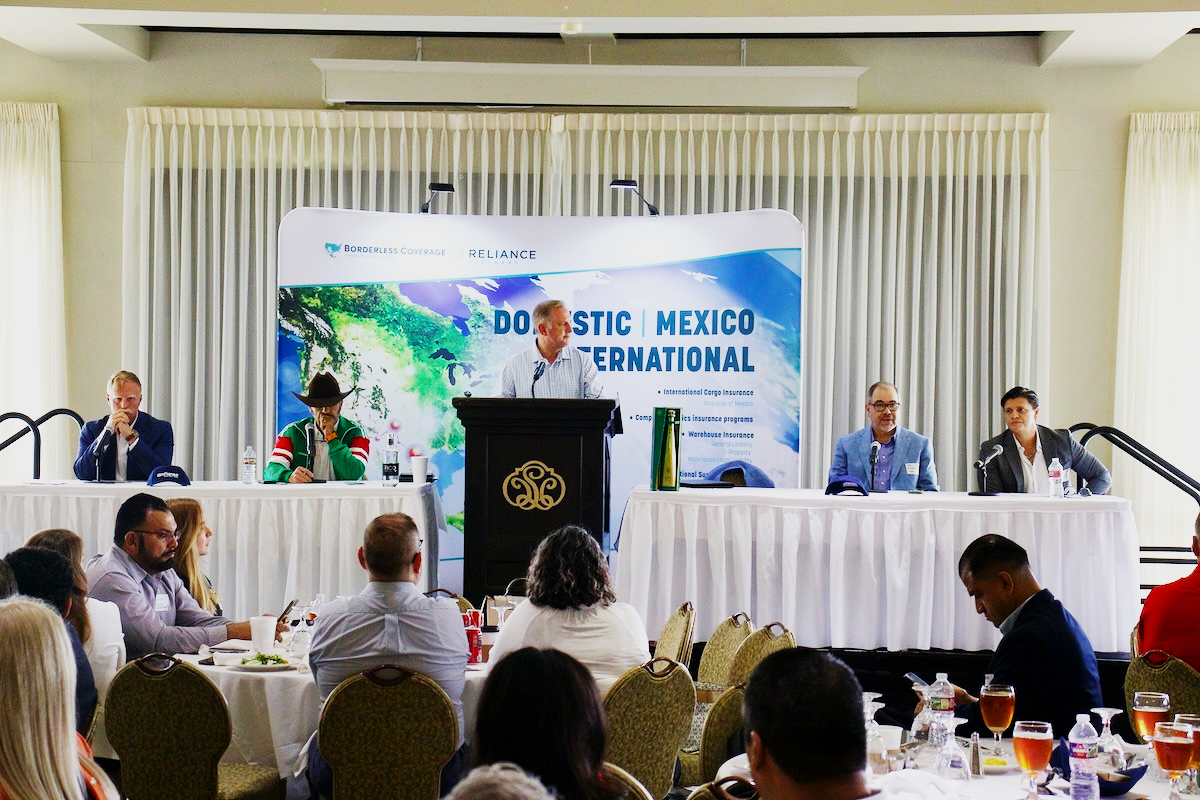
On June 9, 2026, the 9th Annual Modernization of Cross-Border Trade (MCBT) convened at the Laredo Country Club, drawing representatives from more than 500 logistics companies. From customs brokers and freight forwarders to carriers, insurers, and technology providers, the event has become the definitive gathering point for anyone serious about cross-border commerce between the U.S. and Mexico.
"The event started with only 20 people," said Mark Vickers, founder of Borderless Coverage and Executive Vice President and Head of International Logistics at Reliance Partners, which hosts the event. "Now this is the largest U.S. to Mexico logistics event in the U.S." That kind of exponential growth is not just a testament to great event planning — it reflects a deeper, urgent reality: cross-border trade between the U.S. and Mexico is more complex, more consequential, and more dynamic than ever before.
Why Laredo Remains the Heartbeat of U.S.-Mexico Freight
Choosing Laredo as the home of MCBT is no accident. The city sits at the intersection of commerce and culture, serving as the busiest land port of entry in the United States. Billions of dollars in goods — from automotive parts and electronics to fresh produce and, yes, tequila — cross the Laredo bridges every single day. It is a city where the rhythms of trucking dictate daily life and where the decisions made in conference rooms ripple outward to factories in Monterrey, distribution centers in Dallas, and store shelves across the country.
For the logistics professionals who descend on Laredo each year for MCBT, the city is more than a backdrop. It is a living case study in everything the event aims to address: regulatory complexity, infrastructure bottlenecks, insurance challenges, technological transformation, and the ever-present need for collaboration across borders and industries.
Borderless Coverage and the Innovation Behind the Event
Central to the story of MCBT is the trajectory of Borderless Coverage, the company Mark Vickers built as an entrepreneurial venture within the broader logistics insurance space. The company made its mark as the first program to offer per-load, per-project, and per-client cargo insurance tailored specifically for cross-border freight — a genuinely novel approach in an industry accustomed to blanket policies that did not always reflect the real-world risks of moving goods across the U.S.-Mexico border.
That spirit of innovation is woven into the DNA of MCBT itself. The event does not simply celebrate the status quo; it challenges participants to think about what cross-border trade can and should look like in an era of rapid change. Panels, roundtables, and networking sessions push attendees to confront difficult questions about technology adoption, regulatory shifts, and the geopolitical forces reshaping supply chains.
Navigating a Rapidly Shifting Cross-Border Landscape
The timing of MCBT 2026 could not be more significant. Cross-border trade between the U.S. and Mexico is operating under pressure from multiple directions simultaneously. Tariff uncertainty, nearshoring trends, evolving customs regulations under the United States-Mexico-Canada Agreement (USMCA), and persistent driver shortages have all combined to create an environment where agility and information are competitive advantages.
Nearshoring, in particular, has emerged as one of the dominant themes reshaping the freight landscape. As companies across North America work to reduce their dependence on distant supply chains — particularly those rooted in Asia — Mexico has become an increasingly attractive manufacturing and sourcing destination. That shift is driving new freight corridors, new infrastructure investments, and new demand for logistics expertise along the border.
- Automotive and electronics manufacturers are expanding production capacity in northern Mexico, feeding demand for dedicated cross-border freight lanes.
- E-commerce growth is pushing last-mile logistics providers to develop faster, more reliable cross-border fulfillment solutions.
- Insurance and risk management needs are evolving as cargo values increase and regulatory environments become more complex.
- Technology platforms — from electronic customs filing to real-time shipment visibility tools — are becoming non-negotiable for competitive carriers and brokers.
These are precisely the kinds of challenges that make an event like MCBT not just relevant but essential for the industry.
The Community That Keeps Cross-Border Trade Moving
Perhaps the most underappreciated aspect of MCBT is the community it has quietly built over nine years. In an industry where relationships are currency and trust is earned over time, the ability to gather hundreds of decision-makers in one room — or in this case, one country club — creates a kind of compounding value that goes far beyond any single panel discussion or keynote address.
Deals get done. Partnerships form. Problems that seemed intractable in isolation become solvable when the right people are in the same room sharing the same experiences. That is the quiet power behind the event's continued growth, and it is why logistics professionals from across the country make the trip to Laredo year after year.
Looking Ahead: The Future of U.S.-Mexico Logistics
As MCBT enters its second decade, the stakes for cross-border logistics have never been higher. The U.S.-Mexico trade relationship is the second-largest bilateral trade relationship in the world, and the infrastructure, technology, and expertise required to support it must keep pace with growing volumes and rising expectations.
Events like the Modernization of Cross-Border Trade serve a purpose that extends well beyond networking. They function as an annual checkpoint — a moment for an entire industry to assess where it stands, identify what needs to change, and commit to the collaborative work of building something better. From its humble beginnings over dinner in Laredo to its current status as the premier U.S.-Mexico logistics event, MCBT reflects both the dynamism of cross-border trade and the people who have dedicated their careers to keeping goods — and economies — moving.
Whether you are a seasoned customs broker, a technology startup disrupting freight visibility, or a carrier building out new Mexico corridors, one thing is clear: the future of U.S.-Mexico trade will be shaped in rooms like the one at the Laredo Country Club, by the professionals willing to show up, engage, and innovate together.