
Mexico's Wasted Strategic Resources: A Structural Crisis Hiding in Plain Sight
For decades, Mexico has been sitting on a fortune — in minerals, geography, labor, and trade relationships — yet the country's economy stubbornly refuses to take off. With average GDP growth of just 1.5% per year over the past 25 years, the numbers tell a story of chronic underperformance. The root cause isn't bad luck or a lack of resources. It's a deliberate policy architecture that has systematically abandoned the one lever historically proven to generate sustained, long-term economic growth: industrial policy. Meanwhile, both literal and figurative "silver" — from the country's vast mineral wealth to its public capital — continues to be misallocated, underutilized, and, in some cases, simply wasted.
Four Levers, Three in Use, One Abandoned
Any economy has access to four major macroeconomic policy tools: fiscal policy, monetary policy, commercial policy, and industrial policy. Mexico has spent four decades relying on the first three while explicitly stepping back from the fourth. The consequences of this choice are now deeply embedded in the country's economic trajectory and are becoming increasingly difficult to reverse.
Fiscal Policy: Spending More, Investing Less
Mexico's fiscal policy problem is not simply a matter of how much the government spends — it's about what the government spends its money on. Over time, an ever-larger share of public expenditure has been directed toward current spending (salaries, pensions, subsidies), while public investment has been steadily eroded. This matters enormously because public investment is the mechanism that unlocks private investment. Roads, energy infrastructure, research and development, logistics networks — these are the foundations on which private capital multiplies.
By 2026, Mexico's total investment stands at just 3.2% of GDP, while the fiscal deficit climbs to 3.6% of GDP. In other words, the country is borrowing more than it is investing. The financial cost of existing debt will consume 4.1% of GDP — precisely equal to new borrowing as a share of the economy. This creates a deeply troubling cycle: Mexico is going deeper into debt without generating the productive investment needed to grow its way out. The per capita debt burden has reached 151,000 pesos per Mexican citizen, a figure that puts pressure on the country's credit rating and raises borrowing costs for both the government and private businesses alike.
Monetary Policy: High Rates, Appreciated Currency, Squeezed Productivity
Mexico's central bank, Banxico, concluded its rate-cutting cycle in May 2025 with the benchmark rate at 6.50%. That may seem moderate in nominal terms, but Mexico's real interest rate — adjusted for inflation — sits close to 3%, one of the highest among comparable emerging market economies. High real rates serve a purpose: they attract short-term foreign capital and help anchor inflation. But they carry serious side effects that ripple across the entire economy.
When the cost of productive credit is elevated, businesses — especially small and medium enterprises — find it more expensive to invest, expand, or hire. At the same time, the inflow of short-term capital that high rates attract puts upward pressure on the Mexican peso, making the currency stronger than underlying economic fundamentals might otherwise suggest. This appreciation directly undermines the third macroeconomic lever.
Commercial Policy: Exporting Labor, Not Value
An overvalued peso makes Mexican exports more expensive on world markets and imports cheaper at home. This dynamic strikes at the heart of Mexico's commercial model, which is heavily dependent on export competitiveness. In 2025, Mexico recorded a trade surplus with the United States of approximately $196.9 billion — an impressive headline number that masks a structural vulnerability.
Look beyond the US relationship and the picture changes dramatically. Mexico runs a record deficit with China of $123 billion, exporting only $10.2 billion to China while importing $133.3 billion. This gap reveals the core weakness of Mexico's position in global value chains: the country largely imports components from Asia, assembles them domestically, and ships the final product north to American consumers. The economic activity captured in this process is primarily wages — not intellectual property, not brand value, not proprietary technology. Mexico is a sophisticated assembly platform that generates employment but not the kind of deep value creation that produces generational wealth and sustained growth.
Silver as a Symbol: The Strategic Resource Left on the Table
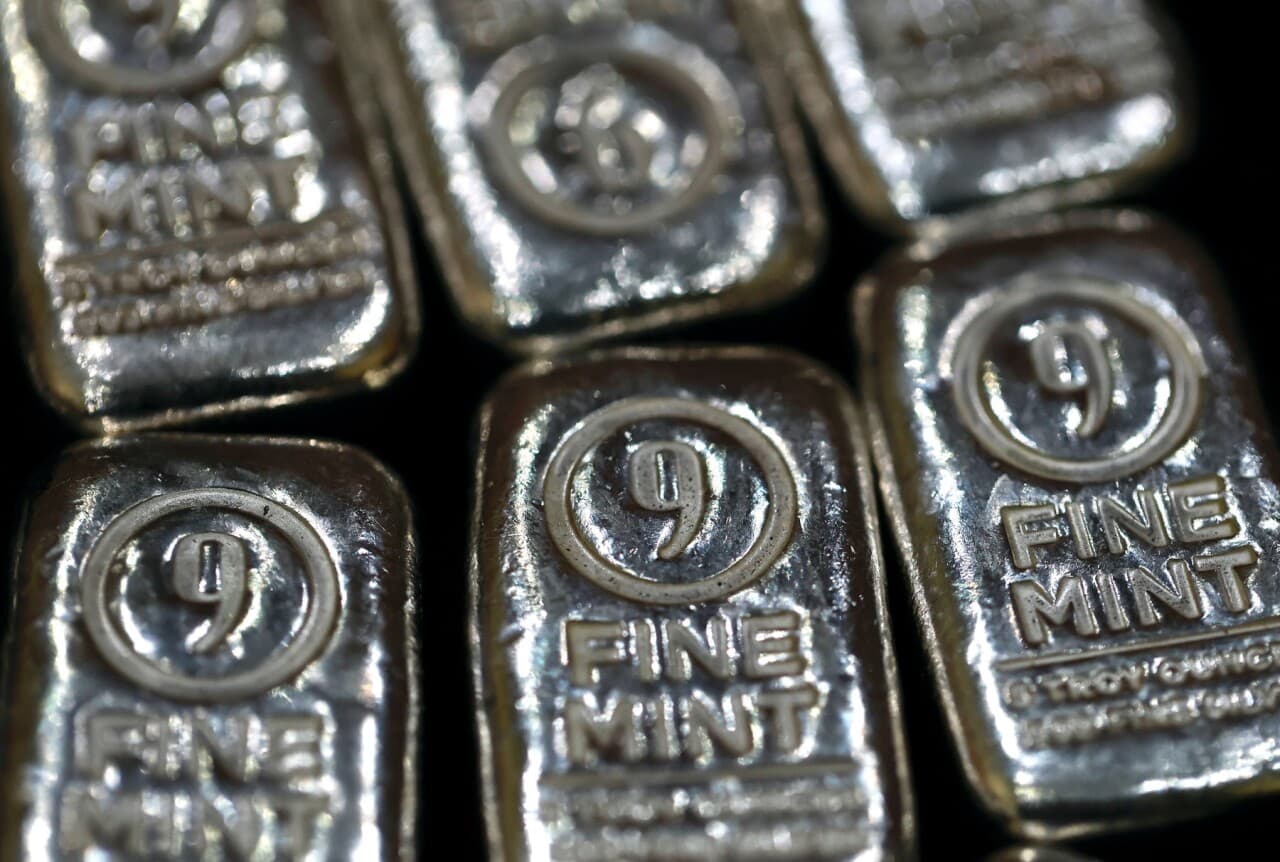
Mexico is the world's largest silver producer. Silver is no longer merely a precious metal — it is a critical input in solar panels, electric vehicles, electronics, and advanced medical devices. As the global energy transition accelerates, demand for silver is set to rise sharply. Mexico sits atop one of the most valuable mineral reserves on Earth precisely at the moment when global supply chains are being restructured and resource security has become a geopolitical priority.
Yet without an active industrial policy, Mexico cannot convert raw mineral extraction into downstream manufacturing, refining, or advanced materials production. The silver leaves the country in largely unprocessed form, and the value-added stages of production — along with the higher-paying jobs they create — happen elsewhere. This is the same pattern that defines Mexico's broader economic model: resources flow out, value accrues abroad.
The Case for Reclaiming Industrial Policy
The evidence from economies that have successfully made the transition from low-value assembly to high-value manufacturing is consistent: industrial policy works when it is strategic, targeted, and sustained. South Korea, Taiwan, and more recently Vietnam have all used deliberate government intervention — in the form of subsidies, strategic public investment, trade protection, and technology transfer requirements — to move up the value chain over time.
For Mexico, reclaiming industrial policy would mean:
- Redirecting public investment toward productive sectors such as advanced manufacturing, clean energy, semiconductors, and digital infrastructure rather than concentrating it on current expenditure
- Designing monetary and exchange rate policies that support export competitiveness rather than short-term capital attraction
- Building local supplier ecosystems around the automotive, aerospace, and electronics industries already present in the country
- Developing value-added processing capacity for strategic minerals like silver, lithium, and copper to capture a larger share of global supply chain revenue
- Investing in education and workforce development aligned with the industries Mexico wants to lead, not just assemble
The Cost of Continued Inaction
Mexico's macroeconomic framework has produced stability — low inflation, a generally manageable exchange rate, and a functioning banking system. These are genuine achievements. But stability is not growth, and growth is not development. A country that grows at 1.5% annually while its population and expectations expand more quickly is, in real terms, falling behind.
The debt trajectory is unsustainable if not matched by a corresponding rise in productive capacity. The trade model is vulnerable to external shocks — a slowdown in US demand, a shift in nearshoring trends, or a change in trade policy could expose the fragility of an economy that captures wages but not value. And the window to leverage strategic resources like silver within a rapidly transforming global economy will not remain open indefinitely.
Mexico has the geography, the demographic profile, the resource base, and the trade relationships to be one of the defining economies of the 21st century. What it lacks is not capacity — it is the political will to deploy the full toolkit of economic policy in service of a coherent long-term vision. The silver, both literal and figurative, is there. The question is whether the country will continue to let it slip through its fingers.