
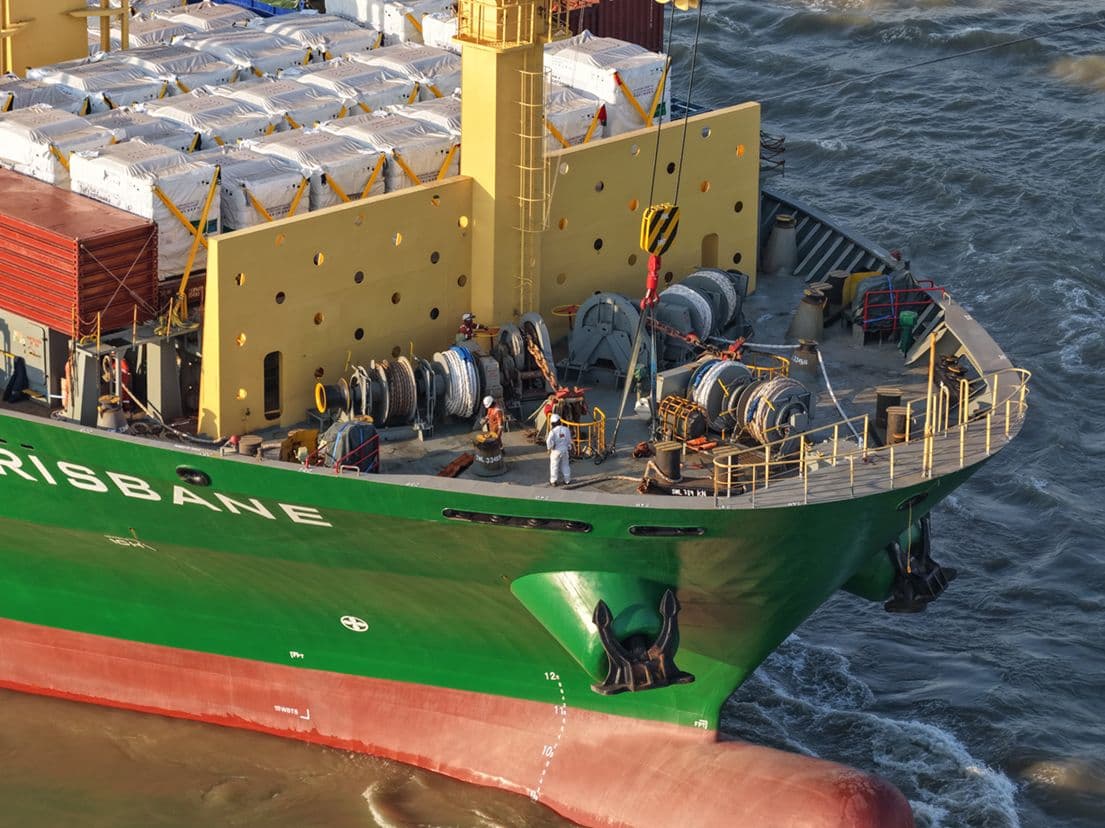
MPV Carriers Still Hesitant to Resume Hormuz Transits Despite US-Iran Truce
Despite a newly brokered peace deal between the United States and Iran offering a glimmer of hope for commercial shipping in one of the world's most strategically vital waterways, multipurpose vessel (MPV) carriers are not rushing back to the Strait of Hormuz. Ship operators speaking at Breakbulk Europe made it clear: before they commit crew members and expensive vessels to transits through the region, they need far more than a diplomatic handshake. They need certainty — and right now, certainty is in short supply.
This cautious posture reflects a broader truth about how the shipping industry manages risk in geopolitically volatile corridors. The Strait of Hormuz, which connects the Persian Gulf to the Gulf of Oman and facilitates the movement of roughly 20% of the world's traded oil, has long been a flashpoint for maritime tension. For breakbulk and MPV operators in particular, the stakes are uniquely high.
Why the Strait of Hormuz Matters So Much to MPV Operators
The Strait of Hormuz is not merely a critical artery for energy exports — it is also a significant corridor for project cargo, heavy lift, and breakbulk freight destined for markets across the Middle East, South Asia, and beyond. MPV carriers, which transport oversized, high-value industrial equipment such as turbines, generators, and construction machinery, have far less flexibility than container lines when it comes to rerouting. Their cargo is often time-sensitive, bespoke, and impossible to offload at alternative ports without enormous logistical cost.
When tensions in the strait escalated in recent years, many MPV operators rerouted shipments around the Cape of Good Hope or restructured contracts to exclude the Persian Gulf entirely. These workarounds added weeks to transit times and significantly inflated freight costs — burdens that ultimately fell on project developers and industrial clients already operating on thin margins.
What Ship Operators Said at Breakbulk Europe
At Breakbulk Europe, one of the industry's most important annual gatherings, MPV and breakbulk operators were measured in their response to the US-Iran truce. While the diplomatic development was welcomed in principle, it did not trigger any immediate plans to re-engage with Hormuz routing. Operators consistently pointed to the same underlying concern: the truce needs to demonstrate staying power before any responsible shipping company can justify the operational and human risk involved.
Several key themes emerged from conversations on the conference floor:
- Crew safety is the non-negotiable priority. Seafarers operating in the region face real and documented risks, including vessel seizures, harassment by naval forces, and drone strikes. No freight rate premium justifies placing crew members in harm's way without adequate confidence in regional stability.
- Insurance markets remain restrictive. War risk premiums for vessels transiting the Strait of Hormuz remain elevated. Until underwriters recalibrate their exposure models in response to sustained peace, the commercial case for resuming Hormuz transits stays weak.
- Charter party clauses add legal complexity. Many existing contracts contain war risk exclusion clauses or force majeure provisions tied to the region. Reopening these routes requires not just geopolitical reassurance but legal clarity with cargo owners and charterers.
- Cargo owners are also cautious. It is not only the carriers who are hesitant. Shippers of project cargo are equally reluctant to route high-value, often irreplaceable equipment through a corridor where the risk of delay, damage, or seizure remains unquantifiable.
The Gap Between Diplomacy and Operational Reality
One of the most important distinctions the shipping industry is drawing right now is between the announcement of a truce and the creation of durable, verifiable peace. History in the region has taught operators that ceasefires and diplomatic agreements can collapse quickly — and that the costs of being caught in a deteriorating security environment are catastrophic and long-lasting.
For MPV carriers specifically, a single incident — a vessel detained, a crew member injured, a cargo damaged — can destroy client relationships built over years, trigger insurance investigations, and generate legal liability that persists long after the headlines have moved on. The industry's reluctance to move quickly on Hormuz is therefore not timidity. It is prudent risk management grounded in hard-won operational experience.
There is also the question of what "certainty" actually looks like in practice. Operators are watching for concrete signals: a sustained reduction in naval incidents, meaningful de-escalation confirmed by flag state advisories, the relaxation of war risk designations by major marine insurers, and updated security assessments from organizations such as the United Kingdom Maritime Trade Operations (UKMTO) and the Joint War Committee (JWC).
What Needs to Happen Before MPV Carriers Return to Hormuz
Industry observers and operators broadly agree on what a credible pathway back to Hormuz routing looks like. It involves a combination of sustained diplomatic progress, measurable changes in the security environment, and commercial signals from the insurance and financial sectors that reflect improved conditions on the ground.
Specifically, operators are looking for:
- A consistent, multi-week track record of incident-free transits by vessels of all flag states through the strait.
- Formal updates to war risk zone designations from the Lloyd's Market Association Joint War Committee, which has listed the Persian Gulf as a high-risk area.
- Updated flag state advisories from major maritime nations, including the UK, the US, and Norway, indicating reduced threat levels for commercial shipping.
- Revised war risk premium structures from marine underwriters reflecting a genuine recalibration of regional risk.
- Clear guidance from P&I clubs on liability exposure for vessels and crew operating in the region under the new political circumstances.
The Broader Impact on Breakbulk and Project Cargo Markets
The hesitancy of MPV carriers has real consequences for the global project cargo supply chain. Major infrastructure projects across the Gulf, in South Asia, and in East Africa rely on the reliable movement of heavy equipment through this corridor. Delays in resuming Hormuz transits mean extended timelines for energy projects, manufacturing facilities, and industrial developments that are already contending with supply chain disruptions on multiple fronts.
Freight forwarders and project logistics companies are also watching closely, aware that any normalization of Hormuz routing would help ease capacity pressures and bring some relief to elevated freight rates on alternative corridors that have absorbed displaced cargo volumes.
Conclusion: Caution Is the Industry's Rational Response
The MPV and breakbulk shipping industry's reluctance to immediately resume Strait of Hormuz transits following the US-Iran peace deal is not a failure of confidence in diplomacy — it is a reflection of the industry's hard-learned understanding that geopolitical risk must be measured in operational and human terms, not just political ones. Until the truce proves durable, until insurance markets respond, and until flag state advisories reflect a genuinely safer operating environment, ship operators will continue to prioritize the safety of their crews and the security of their clients' cargo above all else. The peace deal may be a beginning, but for the shipping industry, it is only the beginning of a longer process of verification.