
Philippine Bonds Lead Asia's Rebound — But Caution Flags Are Flying
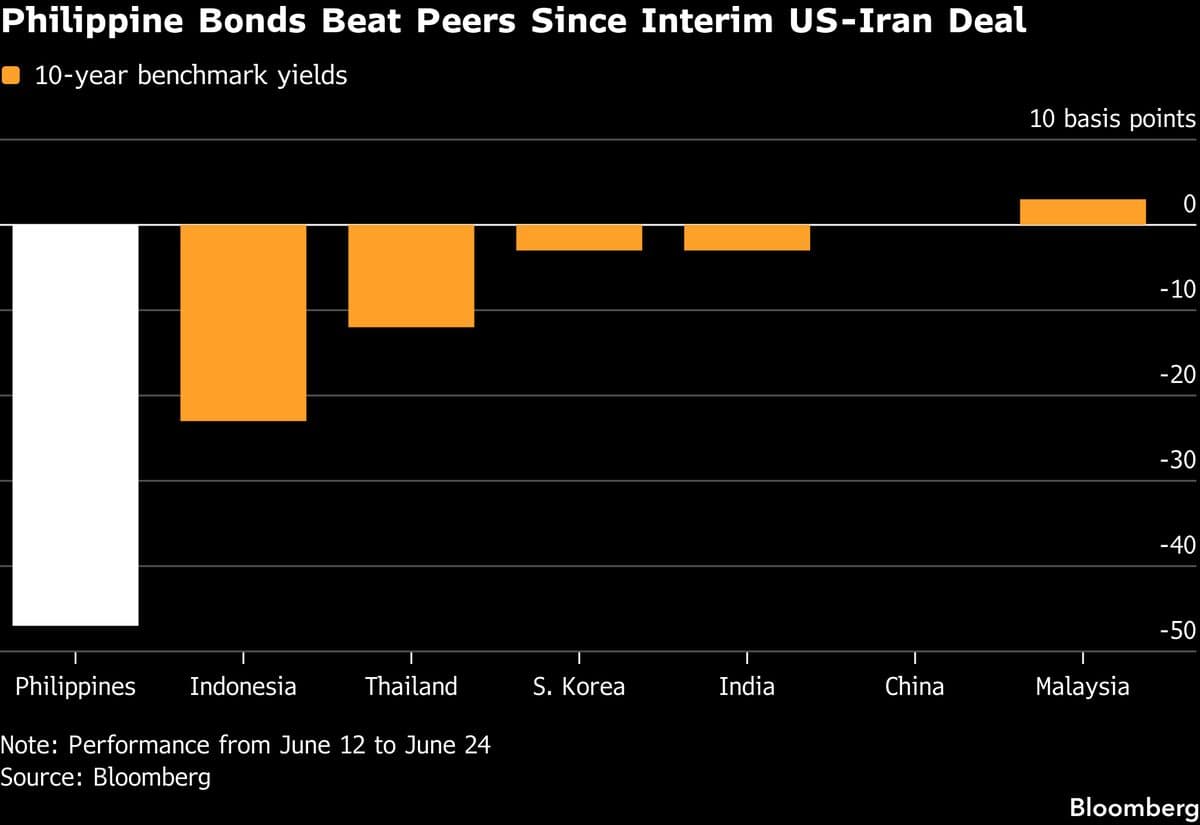
Philippine government bonds have surged to the top of emerging Asia's performance charts following the announcement of an interim US-Iran deal, delivering a sharp relief rally that fixed-income investors have been waiting on. Yet even as yields pull back and prices climb, a growing chorus of institutional voices is urging restraint. Inflation pressures remain stubbornly present, and the Bangko Sentral ng Pilipinas (BSP) has signaled it has little appetite for the kind of aggressive easing cycle that would sustain a durable bond bull run. The gap between the market's enthusiasm and institutional conviction is one of the more interesting fault lines in Asian fixed income right now.
What Triggered the Philippine Bond Rally?
The immediate catalyst was geopolitical. An interim agreement between the United States and Iran eased fears of a broader Middle East conflict that had been rattling global risk sentiment for weeks. Oil prices dipped in response, and that single data point carried outsized significance for the Philippines — a net energy importer whose inflation trajectory is acutely sensitive to global crude benchmarks.
When oil prices fall, Philippine inflation expectations tend to cool almost immediately, and that dynamic fed directly into the bond market. Investors moved quickly to reprice the probability of BSP rate cuts later in the year, pushing yields lower across the curve. The rally was swift enough to make Philippine bonds the standout performer among emerging Asian peers over the short window following the deal's announcement.
For traders who had been sitting on the sidelines waiting for a re-entry point into Philippine fixed income, the combination of easing geopolitical tension and softening oil appeared to offer exactly that opportunity.
Why Institutional Investors Are Not Fully Buying In
Despite the headline-grabbing rally, seasoned institutional investors and market strategists are tempering their enthusiasm with a more measured read of the fundamentals. The core concern is that the conditions underpinning the rally may be more fragile than they appear.
Inflation Risk Has Not Been Eliminated
The US-Iran deal is interim, not permanent, and the geopolitical landscape across the Middle East remains volatile. A breakdown in negotiations — or an escalation elsewhere in the region — could push oil back up rapidly, reigniting the inflationary pressures that have weighed on Philippine bonds for much of the past two years. Domestic food prices, which tend to move independently of global oil and have historically been a persistent driver of Philippine CPI, also remain a concern. Analysts note that supply-side disruptions tied to weather events and logistics constraints have not been fully resolved, meaning headline inflation could prove stickier than current market pricing implies.
The BSP Is Not in a Rush to Cut
Perhaps the most important structural constraint on the Philippine bond rally is the central bank's own posture. The BSP has been consistent in communicating that its priority remains price stability, and policymakers have shown limited inclination to move ahead of the curve on easing. While some market participants had been building rate-cut scenarios into their bond positions, the BSP's public statements have repeatedly pushed back against the idea that cuts are imminent or certain. A central bank that is in no hurry to ease is a meaningful headwind for a bond market that needs lower rates to sustain upside momentum.
Currency and Capital Flow Dynamics Add Complexity
The Philippine peso's performance against the US dollar adds another layer of uncertainty. A weaker peso would amplify imported inflation and further complicate the BSP's calculus around rate cuts. Foreign portfolio flows into Philippine bonds, while positive in the near term following the geopolitical relief, are susceptible to reversal if global risk appetite shifts or if the US Federal Reserve maintains higher rates for longer than currently expected. Institutional investors with cross-border mandates are acutely aware of this vulnerability and are sizing positions accordingly.
The Structural Case for Philippine Bonds: Still Intact, But Conditional
None of this means the long-term investment thesis for Philippine government bonds has collapsed. The country's macroeconomic fundamentals — a young and growing workforce, resilient remittance inflows, and a broadly manageable fiscal position — continue to provide a credible foundation for fixed income investment over a medium-to-long horizon. Infrastructure spending, while creating some fiscal pressure, is channeled toward productive capacity that should support growth and eventually tax revenue over time.
The more nuanced argument from institutional analysts is not that Philippine bonds should be avoided, but that the current rally may have run ahead of what the near-term data can support. Investors who bought into the relief move on geopolitical headlines may find themselves exposed if the macro picture does not cooperate in the weeks ahead.
What to Watch in the Coming Weeks
For investors monitoring Philippine fixed income, several data points and events will be decisive in determining whether the rally has legs or whether it fades into another false dawn.
- Monthly Philippine CPI releases will be closely scrutinized for signs that inflation is genuinely moderating toward the BSP's target band, rather than dipping temporarily on the back of lower oil.
- BSP policy meeting communications will be parsed carefully for any shift in tone toward a more dovish stance, which would provide the fundamental backing the rally currently lacks.
- Oil price movements and the durability of the US-Iran interim deal will remain a key macro variable, given the Philippines' sensitivity to energy import costs.
- US Federal Reserve guidance on the trajectory of American interest rates will influence capital flows into emerging market assets broadly, including Philippine bonds.
The Bottom Line for Bond Market Participants
Philippine bonds are enjoying a well-earned moment in the spotlight, and the relief rally following the US-Iran agreement reflects genuine improvement in one of the market's key risk factors. However, the institutional skepticism surrounding the sustainability of that rally is grounded in legitimate concerns. Inflation has not been tamed decisively, the BSP is not telegraphing an imminent pivot, and the geopolitical conditions that sparked the bounce remain fluid.
For tactical traders, the rally may have offered a short-term opportunity. For longer-term institutional allocators, the more prudent approach appears to be waiting for clearer confirmation that the macro stars are actually aligning before committing to a larger position. In a market where sentiment can shift as quickly as a headline, patience remains one of the most defensible strategies in Philippine fixed income right now.