
When the Tow Bill Is Worse Than the Accident
A rollover on the interstate at 3:00 a.m. is already every motor carrier's nightmare. The driver is shaken, the load is compromised, the road is blocked, and the clock is ticking. But for a growing number of trucking companies across the United States, the moment a tow truck pulls up to the scene, the real financial catastrophe begins. What should be a straightforward recovery operation is increasingly becoming an ambush — one that arrives not in the form of an at-fault lawsuit, but as an invoice for towing and storage fees that can run into six figures.
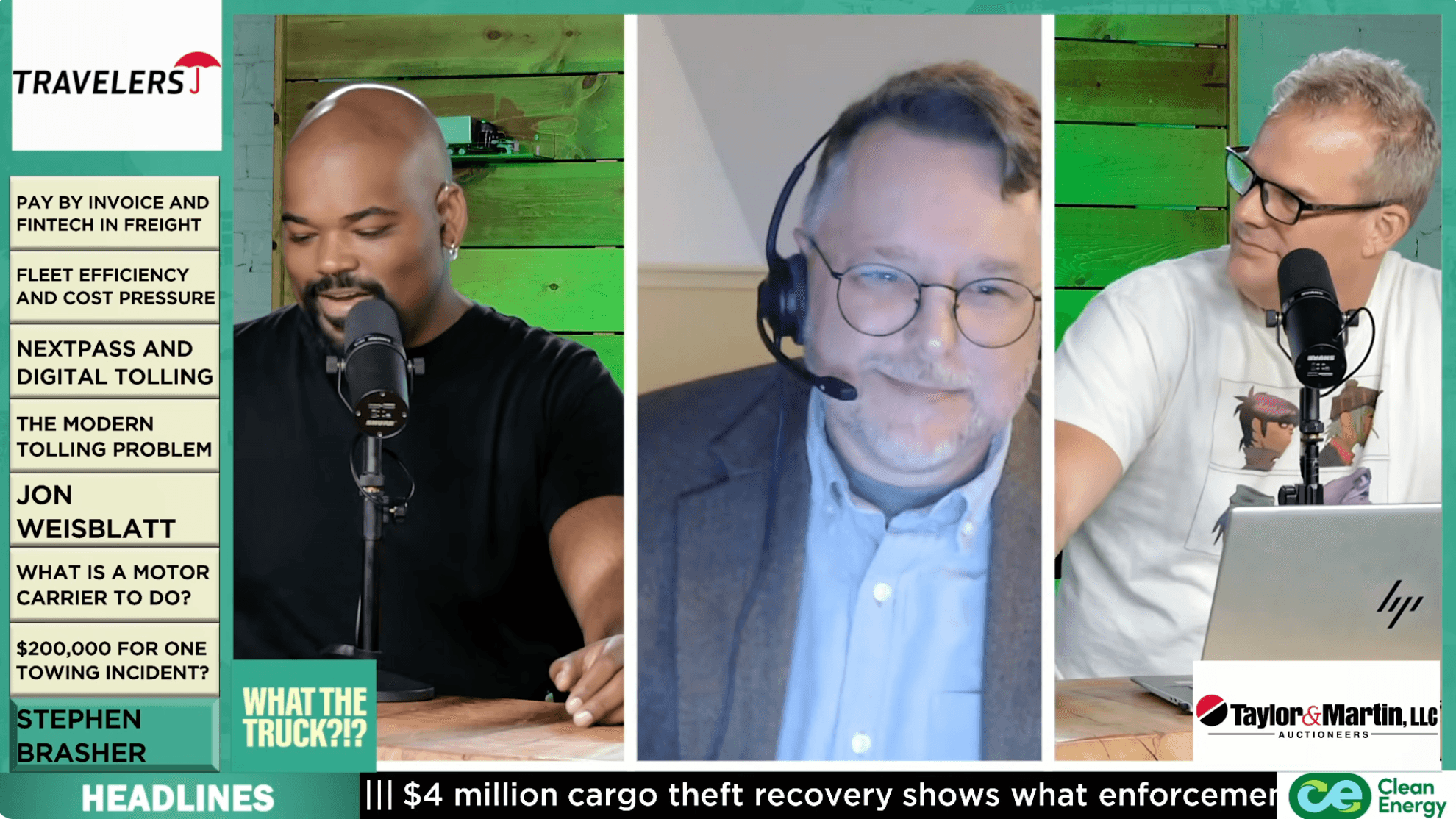
This is the reality of predatory towing, and it is quietly reshaping the risk landscape for commercial motor carriers nationwide. Stephen Brasher, Travelers Inland Marine Claim Unit Manager, recently joined FreightWaves' What the Truck?! with host Malcolm Harris to break down exactly how these practices work, why they are so difficult to fight, and what carriers need to know before the next accident happens.
What Is Predatory Towing?
Predatory towing refers to a set of aggressive and often legally questionable practices carried out by towing companies that target commercial vehicles involved in accidents or breakdowns. Unlike legitimate roadside recovery operations, predatory towers exploit the vulnerability of carriers who have little choice but to accept help at the scene of a crash — especially in the middle of the night, on a remote stretch of highway, or when law enforcement is directing traffic and time is critical.
The tactics typically involve a combination of inflated recovery fees, excessive mileage charges, and storage costs that begin accumulating almost immediately after the truck is moved. In many cases, the towing company moves the vehicle to a private impound yard rather than a facility of the carrier's choosing, locking them into daily storage rates that can range from hundreds to thousands of dollars per day. By the time the carrier or their insurance company is even aware of the full scope of the situation, the bill has already ballooned into tens of thousands of dollars — sometimes far more.
Why Commercial Trucks Are Especially Vulnerable
Passenger vehicles are an easy target for aggressive towers, but commercial trucks are in an entirely different category of exposure. The sheer size and weight of a semi-truck means recovery operations are genuinely more complex and equipment-intensive than a standard vehicle tow. This creates a built-in justification that unscrupulous operators exploit to pad invoices with specialized equipment fees, environmental surcharges, labor costs, and itemized line items that are nearly impossible for a carrier or their adjuster to audit in real time.
Furthermore, most motor carriers are focused on regulatory compliance, load management, and driver safety — not on having a vetted towing vendor network in place before an accident occurs. That gap in preparedness is exactly where predatory operators move in. In many jurisdictions, law enforcement officers are required to call from a rotation list of approved towers, meaning the carrier may have no say in who shows up. Once that tower has possession of the vehicle, the leverage shifts dramatically in their favor.
The Numbers Are Staggering
Brasher's insights underscore just how severe the financial damage can be. What might seem like an ordinary recovery event — a jackknifed trailer, a rollover, a mechanical breakdown in a construction zone — can generate a towing and storage invoice that rivals or exceeds the value of a total vehicle loss claim. Carriers have reported bills of $50,000, $100,000, and in extreme cases even more, stemming not from cargo damage or liability exposure, but purely from towing and impound fees.
For smaller owner-operators and mid-sized fleets, a single incident like this can create serious cash flow disruption, even if insurance ultimately covers a portion of the loss. Deductibles, coverage disputes, and the time it takes to resolve inflated invoices all translate into real financial pain that many carriers are simply not prepared for.
How Carriers Can Protect Themselves
The good news is that preparation and awareness go a long way. Experts like Brasher recommend that motor carriers take proactive steps well before an accident occurs to minimize their exposure to predatory towing practices.
- Establish a preferred vendor network in advance. Identify reputable, vetted towing and recovery companies along your most common lanes. Having a go-to contact ready means your driver or dispatcher can act quickly at the scene rather than waiting for an unknown tower to arrive.
- Train drivers on their rights at the scene. In many states, a carrier has the legal right to request their own towing vendor, even when law enforcement is involved. Drivers need to know this before they need it.
- Document everything immediately. Photos, timestamps, and written communication from the moment a tow is initiated can be critical evidence if a billing dispute arises later.
- Communicate with your insurer in real time. Many commercial insurance carriers, including Travelers, have dedicated teams and resources to help manage towing situations as they unfold. Early involvement can prevent inflated charges from compounding.
- Review your policy coverage carefully. Understand exactly what your commercial auto and inland marine policies cover when it comes to recovery and storage costs, and whether your limits are adequate given current market conditions.
The Regulatory Landscape Is Evolving — But Slowly
Several states have begun introducing legislation to cap towing and storage fees for commercial vehicles, and industry groups have pushed for greater transparency in rotation tow lists and billing practices. However, regulatory progress has been uneven, and in many parts of the country, carriers remain largely unprotected from extreme invoices. Until federal or state-level safeguards catch up with the scale of the problem, the burden of protection continues to fall on individual carriers and their insurance partners.
The Bottom Line for Motor Carriers
Predatory towing is not a fringe issue or a rare occurrence. It is a systematic, financially damaging practice that is affecting fleets of all sizes across the country. As accident recovery costs continue to climb, understanding this risk and taking deliberate steps to mitigate it is no longer optional — it is a core part of responsible fleet management. Partnering with an experienced commercial insurer, building out a vetted towing vendor network, and training your drivers on their rights at the roadside are among the most effective tools carriers have to ensure that a bad accident does not turn into a financial catastrophe.
The road is unpredictable. The tow bill does not have to be.