
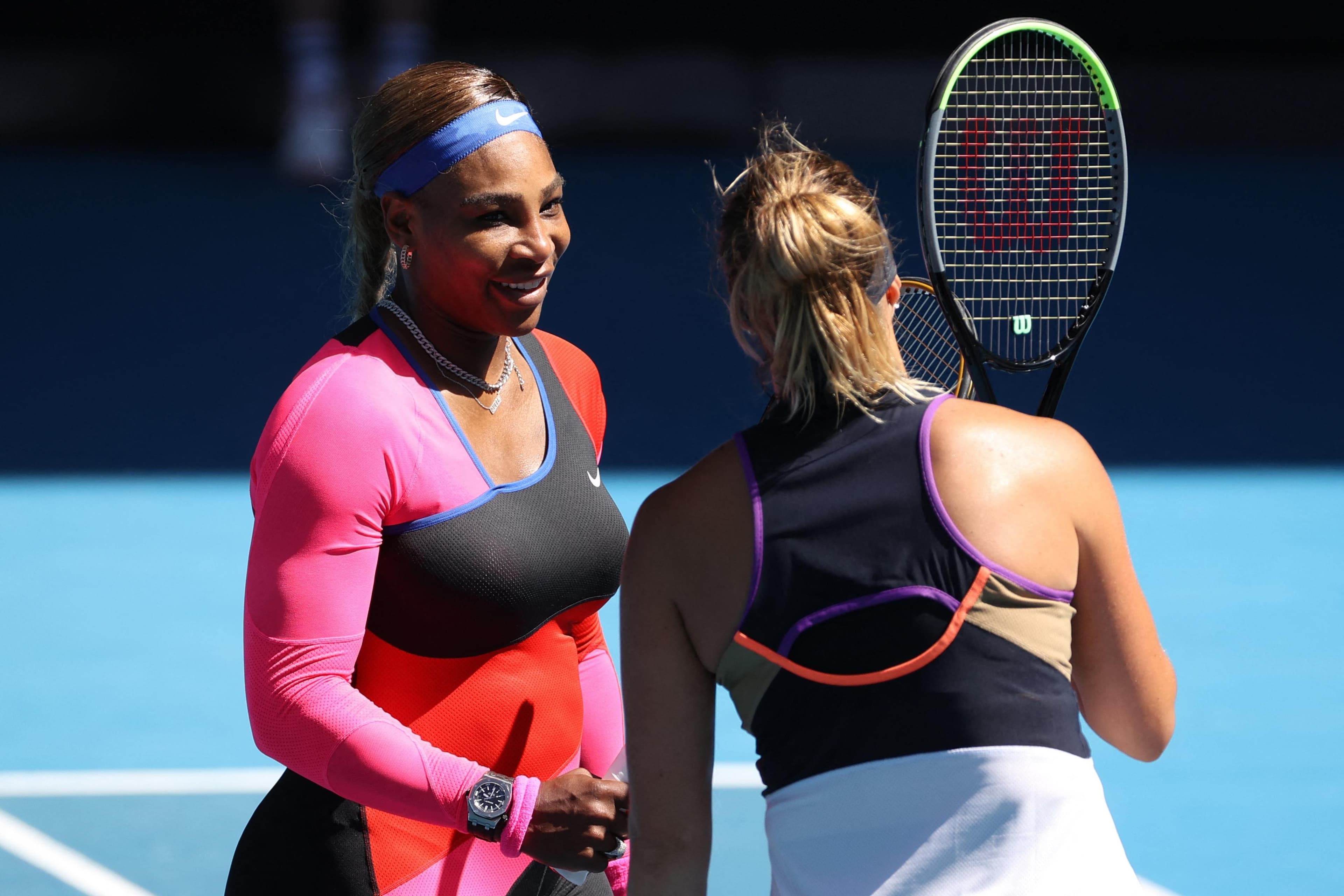
Serena Williams Is Back — And Women's Tennis Will Never Be the Same
Few moments in sports carry the weight of a legend's return. When Serena Williams stepped away from professional tennis in 2022 after a storied career that redefined the sport entirely, most observers believed the chapter was closed for good. But sporting legends rarely follow the expected script. With her confirmed return to competitive tennis at Wimbledon 2026, the entire women's game is once again buzzing with a familiar electricity — and one player in particular has reason to take notice: world number one Aryna Sabalenka.
The timing of Williams' comeback is no coincidence. Wimbledon, the hallowed grass courts of the All England Club, has always been her spiritual home. It is the stage where she won seven singles titles and cemented herself as one of the greatest athletes of the twentieth and twenty-first centuries. Returning there sends an unmistakable message to the current generation of players: Serena Williams is not finished with tennis yet.
Aryna Sabalenka: The Dominant Force Williams Returns To Face
To understand just how significant Williams' return is, you first need to understand the landscape she is walking back into. Women's tennis in 2026 belongs, more than to anyone else, to Aryna Sabalenka. The Belarusian powerhouse has been the most consistent and devastating player on the tour, combining thunderous groundstrokes with an increasingly refined tactical game that makes her almost impossible to beat on any surface.
Sabalenka's rise to the top of the world rankings was not a fluke or a product of a weak era. She has dismantled rivals with her aggressive baseline play, won multiple Grand Slam titles, and shown the kind of mental resilience under pressure that separates great champions from merely excellent players. Her serve, one of the most powerful on tour, often renders opponents helpless before a rally even begins. Her forehand is a weapon of destruction. And in recent years, her backhand — once considered a relative weakness — has become a consistent and controlled weapon in its own right.
Simply put, anyone returning to professional tennis in 2026 faces a Sabalenka-shaped mountain at the very top.
How Does Serena Williams Compare to Today's Game?
Comparing Serena Williams to any player, past or present, is always a complicated exercise. Her 23 Grand Slam singles titles, her longevity, her physical dominance, and her unparalleled ability to raise her game in the biggest moments make her the standard against which all women's players are measured. But returning after years away from competition is a different challenge entirely, and it raises several important questions.
Physical Condition and Match Sharpness
At her peak, Williams was a physical force unlike anything women's tennis had seen. Her combination of speed, power, endurance, and explosive athleticism gave her an edge that technical skill alone could not replicate. Returning from an extended break, maintaining that level of physical conditioning is the first and most pressing challenge she faces. Match sharpness — the instinctive rhythm that only comes from sustained competition — will take time to rebuild, and in a field as deep and talented as the current WTA tour, any hesitation can be punished severely.
Game Style: Power Meets Power
If Williams does reach peak form, a potential clash with Sabalenka would be one of the most compelling matchups imaginable in modern tennis. Both players share a philosophy of aggressive, power-first tennis. Both rely on enormous serves to control points from the outset. Both prefer to take the ball early and dictate rallies rather than absorb pressure and construct points patiently. A match between them would be a collision of wills as much as a tennis contest — and that kind of gladiatorial dynamic is precisely what draws global audiences to the sport.
Mental Game and Grand Slam Experience
One area where Williams still holds an undeniable edge is Grand Slam experience. She has won on every surface, in every kind of pressure situation imaginable. She has come back from sets and match points down. She has won while injured, while grieving, while carrying the weight of an entire cultural moment on her shoulders. Sabalenka is a proven champion, but no one alive in professional tennis carries the sheer volume of high-stakes experience that Williams accumulated over her career.
What Williams' Return Means for Women's Tennis
Beyond the competitive implications, Serena Williams' return to Wimbledon matters enormously for the sport itself. Women's tennis thrives on compelling narratives, and few narratives are more compelling than a legend seeking one final statement on the grandest stage. Her presence will draw eyes to the tournament that may not otherwise have tuned in. It will inspire younger players. It will remind a new generation of fans why this sport captured the world's imagination in the first place.
- Williams' return elevates the global profile of Wimbledon 2026 beyond any other storyline available.
- A potential Williams versus Sabalenka encounter would be one of the most-watched matches in recent tennis history.
- Her comeback challenges younger players to sharpen their games against a true all-time great.
- It reframes the conversation around women's tennis at a moment when the sport needs marquee narratives.
The Verdict: Can Serena Challenge Sabalenka's Throne?
Whether Williams can genuinely challenge Sabalenka for Wimbledon glory remains the question on every tennis fan's lips. Realistically, recapturing championship form after years away from the tour is an enormous ask, even for someone of her extraordinary talent and competitive drive. Sabalenka is at or near the peak of her powers, playing the most consistent tennis of her career, and she will not be moved aside easily by sentiment or nostalgia.
But sport has a habit of confounding expectations. And if there is one player in the history of women's tennis capable of rewriting the script one more time, it is Serena Williams. Her return to Wimbledon 2026 does not guarantee a title — but it absolutely guarantees a moment. And in sport, sometimes a moment is everything.