
The Global Shipping Industry Is Facing a Serious Talent Crisis
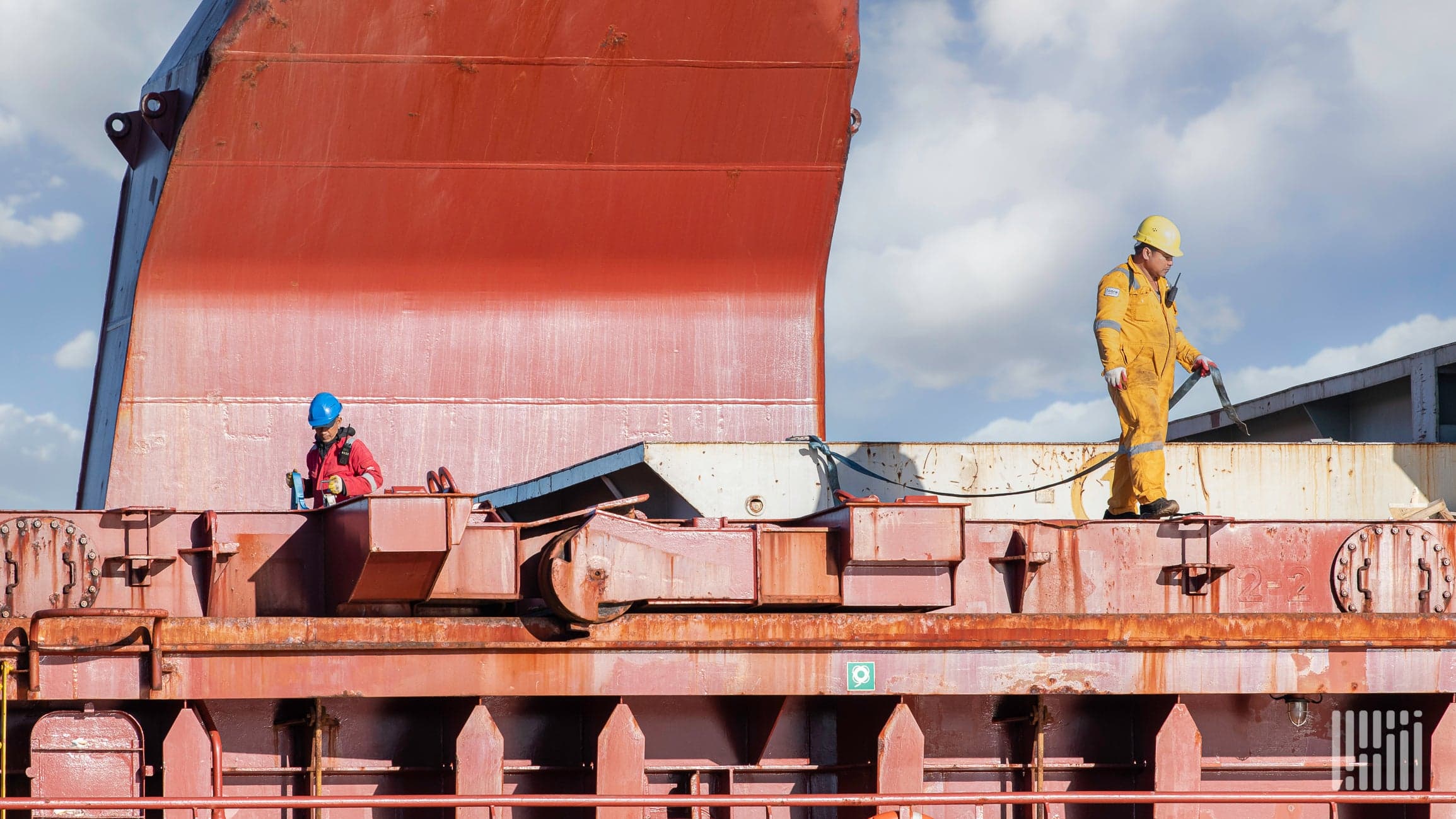
The global maritime industry is one of the most essential yet under-recognized pillars of the world economy. Responsible for transporting approximately 90% of international trade, commercial shipping depends on a workforce of around 2 million men and women who crew vessels across every ocean. Yet despite this critical role, the industry is grappling with a deepening talent shortage that threatens long-term operational stability. Much like the trucking and railroad sectors before it, shipping is now confronting the uncomfortable reality of an aging workforce, widening recruitment gaps, and fierce competition for skilled professionals.
Industry leaders gathered at a recent seminar hosted by the Baltic and International Maritime Council (BIMCO) in Athens to address these mounting concerns head-on. Their discussions shed light on a workforce challenge that is not only structural but also deeply human — one that touches on the lives of seafarers and their families around the globe.
Geopolitical Tensions Add Urgency to an Already Critical Issue
The backdrop to BIMCO's Athens seminar was particularly sobering. Paul Pathy, president of BIMCO — a Copenhagen-based global association of shipowners, charterers, shipbrokers, and agents — highlighted the situation of roughly 20,000 seafarers stranded in the Persian Gulf amid ongoing regional conflict.
"This could hardly be more topical at a time when around 20,000 seafarers are stuck in the Persian Gulf," Pathy said. "At times like these, it's not only the principle of freedom of navigation that is compromised, but also the freedom of our seafarers who are prevented from going home to their families. Once again, they are paying a very high price in the middle of a conflict. Their freedom of navigation should never be negotiable."
This statement underscores a recurring reality in maritime employment: seafarers routinely face risks that workers in most other industries never encounter. Their vulnerability in geopolitical hotspots makes attracting new talent even more difficult and raises urgent questions about the industry's duty of care to its workforce.
The Human Dimension Behind the Headlines
BIMCO Secretary General and Chief Executive David Loosley echoed this concern about the underrepresentation of seafarers in public discourse. "When shipping makes the headlines, it's usually because something has gone wrong, and too often what gets lost behind the headlines is the human dimension — the people," Loosley said.
This observation is telling. The maritime industry has historically struggled to communicate its story to the broader public, making it difficult to attract younger generations who are increasingly drawn to visible, purpose-driven careers. When shipping does appear in the news, it is often in the context of accidents, environmental incidents, or geopolitical crises — rarely in a way that celebrates the professionalism, skill, and dedication of the people who keep global supply chains moving.
Changing this narrative is essential not just for public perception, but for active recruitment. If shipping cannot tell a compelling story about the value of a seafaring career, it will continue to lose the competition for talent to other industries that are more adept at marketing themselves to young professionals.
Recruitment Is Only Half the Battle: Retention Matters Just as Much
One of the most significant themes to emerge from the BIMCO seminar was the distinction between attracting new seafarers and retaining experienced ones. Elpi Petraki, an executive with Greek shipowner Enea Management and president of the Women's International Shipping and Trading Association (WISTA), stressed that the industry must focus not only on recruiting the next generation but also on preserving the institutional knowledge held by senior mariners who are transitioning to shore-based roles.
This is a challenge familiar to industries with aging workforces. When experienced professionals exit without adequate knowledge transfer, organizations lose decades of hard-won expertise almost overnight. In maritime operations, where decision-making in complex and high-stakes environments depends heavily on experience, this loss can have serious safety and operational consequences.
Petraki's remarks point toward a need for formal mentorship programs, structured knowledge-transfer initiatives, and better pathways that allow retiring seafarers to remain engaged with the industry in advisory or training capacities rather than exiting it entirely.
Gaps in Recruitment and Training Must Be Addressed
Julia Anastasiou, chief crew management officer at OSM Thome — a leading ship management company headquartered in Norway with global offices including in the United States — brought a sharp operational perspective to the conversation. She noted that when examining the profile of a modern seafarer and what is needed to prepare them for the future, clear gaps emerge in both recruitment and training processes.
Critically, Anastasiou highlighted that the industry is facing a fight for talent, not merely a fight for recruitment numbers. This is an important distinction. Filling vacancies with unqualified or poorly prepared candidates does not solve the underlying problem; it may in fact compound it by increasing turnover and reducing vessel safety standards.
- Training curricula need to be modernized to reflect the increasing digitization and automation of maritime operations.
- Recruitment pipelines must extend beyond traditional maritime nations to tap into a broader global talent pool.
- Industry employers need to invest in workplace culture improvements that make seafaring a more attractive and sustainable career choice.
- Mental health and wellbeing support for seafarers must be elevated as a core component of talent retention strategies.
Diversity as a Strategic Imperative
The involvement of WISTA president Elpi Petraki in these discussions also signals a growing recognition that diversity is not merely a social good but a strategic necessity for the industry. Women remain significantly underrepresented in the maritime workforce, and the industry is slowly waking up to the fact that excluding half the global talent pool from consideration is a luxury it can no longer afford.
Efforts to increase the representation of women, as well as seafarers from underrepresented regions and backgrounds, are gaining momentum. However, meaningful progress will require more than awareness campaigns. It demands structural changes in hiring practices, onboard working conditions, and career development opportunities that make maritime employment genuinely inclusive and equitable.
What the Maritime Industry Can Learn From Trucking and Rail
The comparison to trucking and railroads is instructive. Both sectors have faced serious workforce shortages driven by aging demographics and difficulty attracting younger workers. Both have also invested heavily in technology, automation, and rebranding efforts to modernize their appeal. The maritime sector is at a similar inflection point and has the opportunity to learn from both the successes and missteps of its land-based counterparts.
Investments in digitalization, improved working conditions, competitive compensation, and stronger public advocacy for the profession are all levers the industry can pull. The release of an upcoming BIMCO report on maritime workforce issues will likely provide additional data and recommendations to guide these efforts.
The Road Ahead for Maritime Workforce Development
The conversations at BIMCO's Athens seminar make one thing clear: the maritime talent crisis is real, multifaceted, and urgent. Addressing it will require coordinated action from shipowners, training institutions, governments, and international organizations alike. The 2 million seafarers who sustain global trade deserve an industry that invests as seriously in their futures as they invest in the world's supply chains. Getting workforce strategy right is not optional — for an industry that keeps the global economy afloat, it is an absolute necessity.