
The Mental Game Behind the World's Greatest Soccer Players
Part of soccer's beauty lies in its unpredictability. At the 2026 World Cup, we have already witnessed Morocco hold five-time champion Brazil to a 1-1 draw, Australia upset Turkey against the odds, and perhaps most strikingly, a Cabo Verde side ranked 67th in the world neutralize Spain — many pundits' favorite for the title — in a goalless stalemate. These moments remind us that talent and tactics alone do not determine outcomes on the pitch.
So what truly separates winners from losers in modern soccer? Quality players and elite coaching certainly matter. Advanced sports analytics, including real-time player geolocation metrics and predictive algorithms, have added a new dimension to in-game decision-making. Yet beneath the data and the tactics lies something equally powerful: the mind. Sports psychology has become one of the most critical — and most overlooked — components of elite soccer performance.
Eric Zillmer, sport psychologist and director of the Global Sport Leadership Solutions Lab at Drexel University, has spent years studying how players and coaches manage chaos on the pitch to strategically improve performance. Drawing on his work, here are five essential psychological principles that the world's best soccer players — including Lionel Messi and Kylian Mbappe — employ to gain a mental edge.
1. Emotional Regulation: Staying Calm Under Pressure
At the highest levels of soccer, the margins between success and failure are razor-thin. A missed penalty in the 90th minute, a red card in extra time, or a critical defensive error can define an entire tournament. What separates elite players from the rest is not the absence of pressure — it is how they manage it.
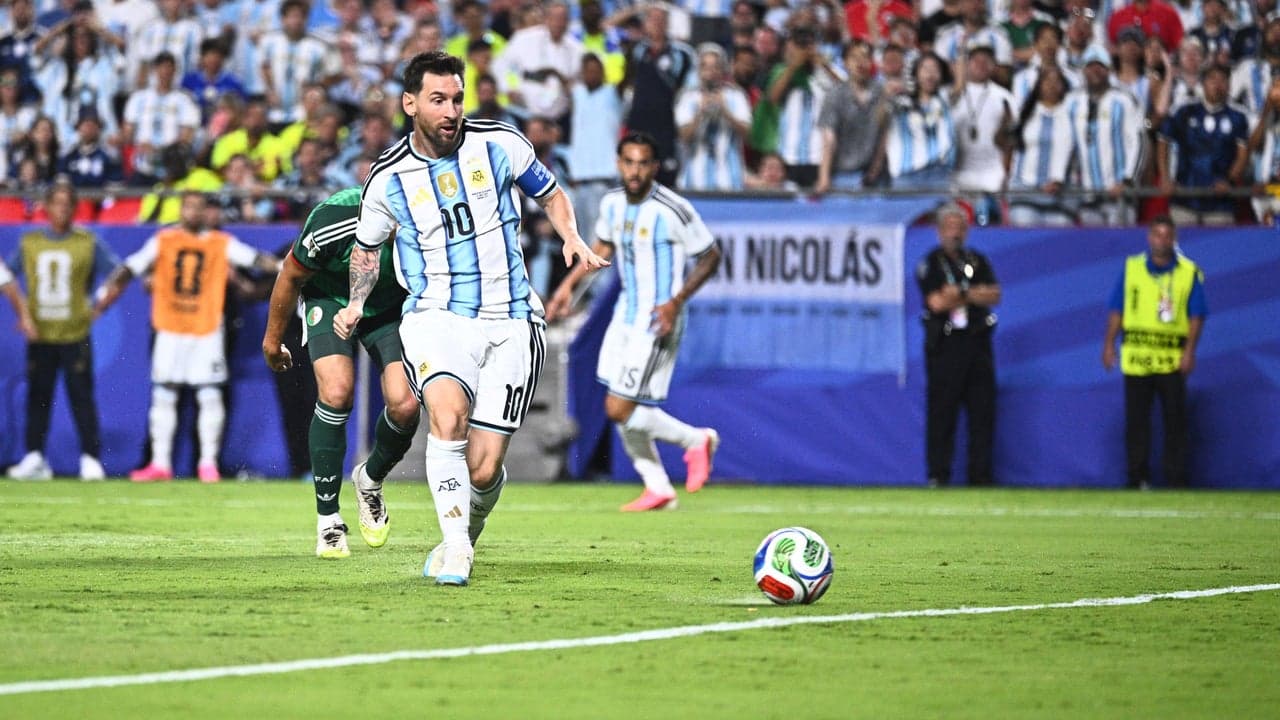
Lionel Messi is a masterclass in emotional regulation. Despite carrying the immense weight of an entire nation's World Cup dreams for two decades, he has consistently performed when it matters most. Sports psychologists refer to this as the ability to maintain an optimal emotional state — neither too anxious nor too relaxed — commonly known as being "in the zone." Players who master emotional regulation recover faster from setbacks, make clearer decisions under stress, and sustain high performance throughout an entire match.
Techniques such as controlled breathing, mindfulness training, and pre-performance routines all contribute to emotional regulation. Many top clubs now integrate these methods into their daily training schedules.
2. Focus and Attentional Control: Seeing the Game Differently
Soccer is a fast-moving, chaotic environment. At any given moment, a player must process dozens of variables — the position of teammates, the movement of opponents, the trajectory of the ball, and the instructions of the coaching staff. The ability to direct and sustain attention effectively is what allows elite players to make split-second decisions with remarkable accuracy.
Kylian Mbappe exemplifies this quality. His ability to read space, anticipate defensive movements, and execute at full sprint reflects extraordinary attentional control. Rather than reacting to the game, he appears to predict it. This cognitive skill, often called "game intelligence," is deeply rooted in psychological training. Research in sports psychology shows that elite athletes develop superior attentional focus through repetitive deliberate practice and mental simulation exercises, including visualization techniques that mentally rehearse match scenarios before they occur.
3. Resilience and the Growth Mindset
No player — regardless of their talent — escapes failure in soccer. Messi himself endured years of World Cup heartbreak before lifting the trophy in 2022. The difference between players who collapse under adversity and those who grow stronger lies in psychological resilience and what Stanford psychologist Carol Dweck famously coined the "growth mindset."
Players with a growth mindset view mistakes not as evidence of inadequacy but as opportunities to learn and improve. They embrace challenges, persist through setbacks, and treat critical feedback as valuable information rather than personal attacks. Coaches at elite clubs actively work to cultivate this mindset culture within their squads. Resilient teams bounce back from conceding goals, adapt to tactical changes mid-match, and maintain belief even in the most difficult circumstances — qualities that explain why underdog nations like Cabo Verde can hold tournament favorites to a draw.
4. Team Cohesion and Collective Efficacy
Soccer is fundamentally a team sport, and individual brilliance can only take a squad so far. The psychological bond between players — their trust, communication, and shared sense of purpose — directly influences collective performance. This concept, known as team cohesion, is one of the strongest predictors of sporting success identified in sports psychology research.
Collective efficacy takes this a step further. It refers to a group's shared belief that they can succeed together as a unit. Teams with high collective efficacy are more persistent when trailing in a match, more coordinated in high-pressure moments, and more resistant to the psychological impact of adversity. This is precisely why national teams that appear tactically inferior on paper can outperform more talented opponents — their psychological unity compensates for any technical gap.
5. Coping With Chaos: Adaptability as a Psychological Skill
Modern soccer is unpredictable by nature. Tactical shapes shift mid-game, key players are injured or sent off, and momentum can swing in a matter of seconds. The psychological ability to adapt — to reorganize one's thinking and remain effective in conditions of uncertainty — is increasingly recognized as a core performance competency.
Sport psychologists work with players and coaches to develop flexible decision-making frameworks that allow them to stay composed when plans fall apart. This includes training for adversity scenarios, building confidence through past successes, and developing mental scripts for responding to unexpected events. Players who can thrive in chaos, rather than being paralyzed by it, consistently outperform those who rely on rigid preparation alone.
Why Sports Psychology Is No Longer Optional at the Elite Level
As the 2026 World Cup continues to deliver surprises, one lesson is becoming increasingly clear: physical preparation and tactical sophistication are necessary but not sufficient for success. The mental game — emotional regulation, attentional focus, resilience, team cohesion, and adaptability — represents the final frontier of performance optimization in modern soccer.
- Emotional regulation helps players perform under the most intense pressure moments.
- Attentional control enables elite decision-making at speed and in chaos.
- A growth mindset transforms failures into fuel for improvement.
- Team cohesion and collective efficacy elevate entire squads beyond the sum of their parts.
- Adaptability allows players and coaches to remain effective when the unexpected happens.
From Messi's serene composure in a penalty shootout to Mbappe's explosive confidence in one-on-one situations, the psychological principles these stars embody are not innate gifts reserved for a chosen few. They are skills that can be taught, trained, and refined — and increasingly, they are the difference between lifting the trophy and going home early.
As sports science continues to evolve, psychology will only grow in importance at every level of the game. The teams and players who invest in their mental performance today are laying the groundwork for success tomorrow — on the world's biggest stage and beyond.