
UN Security Council Sounds Alarm Over El Obeid as RSF Military Buildup Intensifies
The United Nations Security Council has issued a stark warning over escalating threats to the Sudanese city of El Obeid, expressing deep alarm at reports of substantial military reinforcements by the Rapid Support Forces (RSF) encircling the strategically vital urban center. Council members cautioned that the buildup could be a precursor to a devastating ground offensive, raising urgent fears about the potential for mass atrocities against the city's civilian population.
El Obeid, the capital of North Kordofan state, is one of Sudan's largest cities and serves as a critical humanitarian hub in a country already devastated by more than two years of brutal conflict. If the RSF were to launch a full-scale assault, aid organizations and human rights bodies warn the consequences for civilians could be catastrophic and irreversible.
Background: Sudan's Ongoing Civil War and the Role of the RSF
Sudan descended into open civil war in April 2023 when fighting erupted between the Sudanese Armed Forces (SAF) and the Rapid Support Forces, a powerful paramilitary group that grew out of the notorious Janjaweed militias. What began as a power struggle between the country's two most dominant military factions quickly spiraled into one of the world's worst humanitarian disasters.
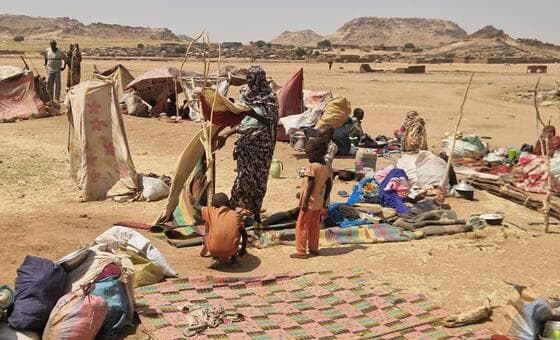
Since the outbreak of hostilities, the RSF has been accused of widespread atrocities, including mass killings, systematic sexual violence, and the deliberate targeting of civilian infrastructure. The conflict has displaced more than ten million people internally and pushed hundreds of thousands across borders into neighboring countries such as Chad, Egypt, and South Sudan, according to UN estimates.
The RSF has been particularly active in Darfur and Kordofan regions, areas that have historically suffered cycles of extreme violence. Their reported advance toward El Obeid represents a potentially decisive moment in the war, as the city holds both symbolic and logistical significance for control of central Sudan.
Why El Obeid Matters: Strategic and Humanitarian Significance
El Obeid is not just another provincial town — it is a lifeline. The city functions as a major distribution point for humanitarian aid flowing to millions of people in central and western Sudan who depend on international assistance for basic survival. It hosts hospitals, aid warehouses, and coordination offices for numerous UN agencies and NGOs operating in the region.
A ground offensive on El Obeid would almost certainly trigger a mass displacement crisis on top of an already overwhelming one. Hospitals, schools, and markets that still function in the city would likely be destroyed or rendered inaccessible, cutting off essential services to hundreds of thousands of civilians who have already fled violence elsewhere and sought refuge there.
Beyond the humanitarian dimension, the fall of El Obeid would represent a major strategic gain for the RSF, potentially allowing them to consolidate control over vast swaths of central Sudan and further fragment the Sudanese Armed Forces' ability to mount a coherent defense.
The UN Security Council's Warning: What Was Said and Why It Matters
Security Council members expressed serious concern over intelligence and field reports pointing to a significant concentration of RSF fighters and heavy weaponry around El Obeid. The language used by Council members — invoking the risk of "mass atrocities" — carries profound weight under international law and signals that the international community is watching closely.
The term "mass atrocity" in UN parlance typically encompasses crimes against humanity, war crimes, ethnic cleansing, and genocide. By explicitly invoking this language, Security Council members were not merely expressing diplomatic discomfort — they were activating the broader framework of international responsibility, including the Responsibility to Protect (R2P) doctrine, which obligates the international community to intervene when a state fails to protect its own citizens from such crimes.
This warning follows a pattern of escalating RSF offensives in populated urban areas. The RSF's assault on and prolonged siege of cities like Khartoum and El Fasher in North Darfur have already been characterized by human rights investigators as involving systematic targeting of civilians. El Obeid now appears to be in the crosshairs of a similar campaign.
International Response and Calls for Urgent Action
Alongside the Security Council's warning, humanitarian organizations have renewed urgent calls for unimpeded access to El Obeid and surrounding areas. Aid convoys have repeatedly been blocked, looted, or attacked by armed actors throughout the conflict, leaving millions without food, medicine, and clean water.
Several member states have called on the international community to apply diplomatic pressure on all parties to the conflict, and particularly on states that have been accused of supplying arms to the RSF. Human rights groups have pointed to external military support as a key factor enabling the RSF's continued offensives despite widespread international condemnation.
The African Union and the Intergovernmental Authority on Development (IGAD) have also been urged to intensify mediation efforts, though previous ceasefire agreements have repeatedly collapsed within days of being signed.
The Civilian Cost: A Crisis the World Cannot Ignore
Sudan is currently experiencing one of the largest and most underfunded humanitarian emergencies in the world. Famine conditions have been confirmed in multiple regions, and the UN has warned that millions more face acute food insecurity as conflict disrupts farming, trade, and aid delivery.
Children, women, and the elderly bear the heaviest burden. Reports of sexual violence used as a weapon of war have been widespread, and child recruitment by armed groups has been documented by UN monitors. The psychological and physical toll on Sudan's civilian population is immeasurable.
What Happens Next: A Defining Moment for Sudan and the International Community
The situation around El Obeid represents a critical juncture — not only for Sudan's military and political future, but for the credibility of international institutions tasked with preventing mass atrocities. Whether the Security Council's warning translates into concrete protective action, or whether it becomes another document of record chronicling a tragedy that was predicted and not prevented, remains to be seen.
What is undeniable is that the people of El Obeid — like so many millions of Sudanese across the country — urgently need the world's attention, political will, and sustained humanitarian support. The window to act may be narrow, and the cost of inaction, as history has repeatedly shown in Sudan and beyond, is measured in lives.