
Trump Issues Stark Warning to Iran Over Hezbollah Activity in Lebanon
United States President Donald Trump has escalated his rhetoric toward Iran, issuing a stark public warning on his Truth Social platform that the United States would launch renewed and intensified military strikes against Tehran if it failed to rein in its Lebanese ally, Hezbollah. The warning came on a Sunday that also saw diplomatic representatives from both countries gathered in Switzerland for ongoing nuclear negotiations — a jarring juxtaposition of battlefield brinkmanship and diplomatic engagement that underscores just how volatile the current situation in the Middle East has become.
"If it does not do so, we will attack Iran again with great force, as we did last week, or even more powerfully," Trump declared, making explicit reference to recent US military action against Iranian targets. The statement drew immediate attention from governments and analysts around the world, given the fragile state of US-Iran relations and the ongoing conflict between Israeli forces and Hezbollah in southern Lebanon.
The Context: Fighting in Southern Lebanon and a Fragile Ceasefire
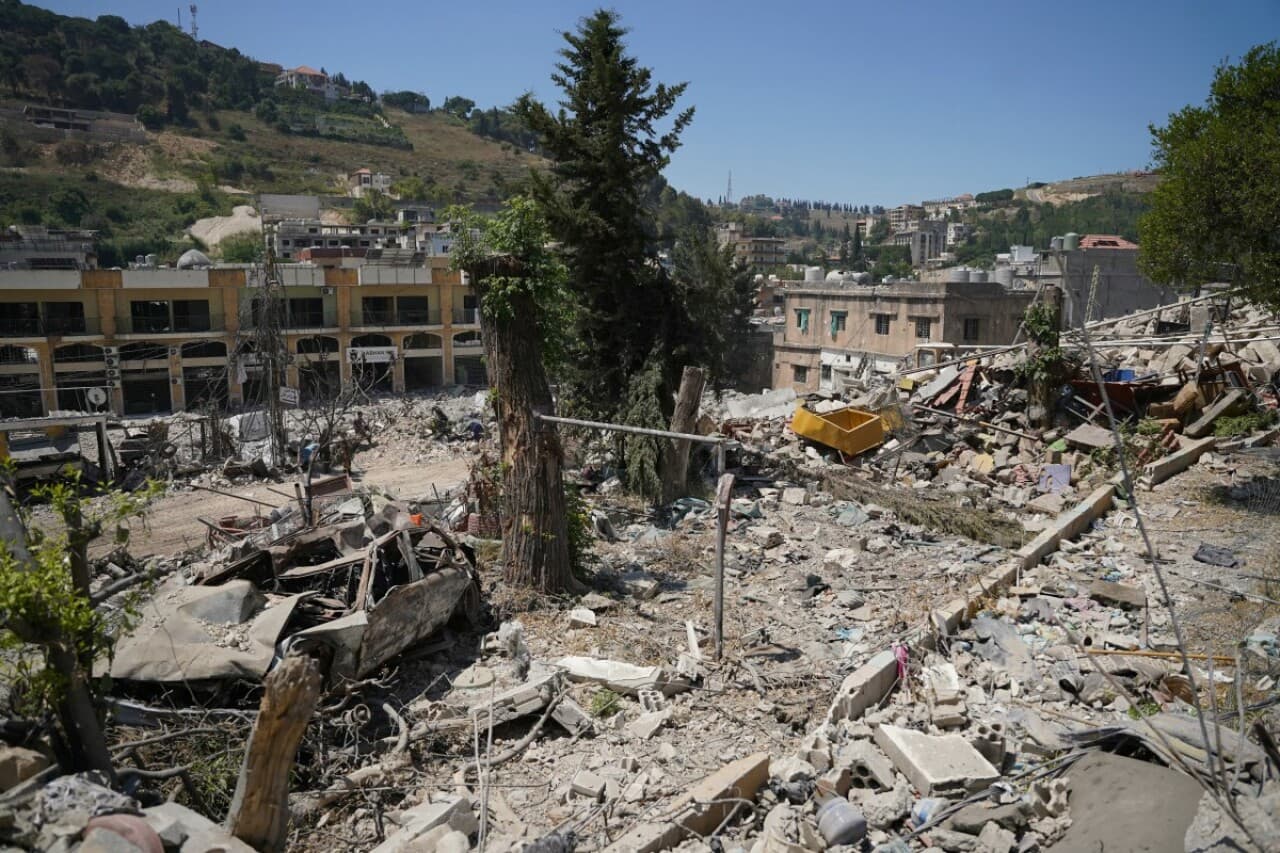
The backdrop to Trump's warning is a significant escalation of violence in southern Lebanon, where the Israeli military and Hezbollah — the Iranian-backed Islamist group — have exchanged fire in recent days. Israeli airstrikes on Saturday alone killed at least 30 people across eastern and southern Lebanon, marking one of the deadliest single days of violence in the region in recent memory.
A nighttime truce was subsequently ordered, with the Israeli military instructed to halt active combat operations against Hezbollah. However, the ceasefire remains fragile, and both sides have continued to blame each other for provoking the violence. Israel and Hezbollah have each accused the other of firing first, leaving the international community uncertain about who is steering the conflict — and how to stop it.
The renewed fighting is particularly alarming given that a memorandum of understanding signed just days earlier — on Wednesday — between the United States and Iran explicitly called for a cessation of hostilities on all fronts, including Lebanon. That agreement, which reportedly also addresses uranium enrichment levels, the Strait of Hormuz, and a reconstruction fund, was seen as a meaningful first step toward a broader diplomatic resolution. The violence in Lebanon has now put that fragile progress in serious jeopardy.
Iran's Response: "Measure Your Words"
Trump's threat did not go unanswered. Mohammad Baqer Qalibaf, the head of Iran's negotiating team currently involved in the Switzerland talks, issued a pointed rebuke on Sunday, posting on X (formerly Twitter) without naming Trump directly but clearly responding to his message.
"They would do well to measure their words. Our armed forces are ready to respond to them in another way," Qalibaf warned. The statement was carefully worded — stopping short of an outright declaration of intent — but its meaning was unmistakable. Iran is signaling that it views Trump's rhetoric as inflammatory and potentially destabilizing to the very negotiations both sides are currently engaged in.
The contrast between Iran's negotiating posture and Trump's public declarations illustrates the deep tension within the diplomatic process. While Iranian and American officials are sitting across the table from one another in Switzerland, the US president is simultaneously threatening military force through a social media post — a dynamic that complicates the work of diplomats on both sides.
Iran's Core Demand: Israel Must Stop Its Bombing Campaign
Central to Iran's position in the negotiations is the demand that Israel end its bombing campaign in Lebanon as a precondition to any broader agreement with Washington. Tehran maintains that it cannot be held solely responsible for Hezbollah's actions while Israeli airstrikes continue to kill civilians in Lebanese territory. From Iran's perspective, asking it to "stop its allies" while those allies are actively under bombardment is an unreasonable and one-sided demand.
This creates a circular problem for diplomats. Israel — which is not a party to the US-Iran negotiations — has its own strategic calculus regarding Hezbollah, an organization it views as an existential threat. The Israeli government is unlikely to halt military operations in response to pressure applied through a separate diplomatic channel. Yet without some movement on that front, Iran has indicated it will not fully comply with the terms of the memorandum of understanding as they relate to Lebanon.
What Happens Next: High Stakes for the Region
The coming days will be critical. Several key questions now hang over the situation:
Will the Switzerland talks survive the public back-and-forth between Trump and Iranian officials, or will the hostile rhetoric cause one side to walk away from the table?
Can a durable ceasefire between Israel and Hezbollah be established, and if so, who brokers it and under what terms?
How will Iran's armed forces interpret Qalibaf's statement that they are "ready to respond in another way" — and does that signal a potential escalation beyond Lebanon?
Will the memorandum of understanding signed last Wednesday hold, or will the current violence render its terms unenforceable?
Analysts warn that the situation has all the ingredients for rapid escalation. A regional war involving the United States, Iran, Israel, and Hezbollah — with possible ripple effects across Iraq, Syria, and the broader Gulf — remains a serious risk if diplomacy fails to establish clear guardrails in the very near term.
A Delicate Balance Between Force and Diplomacy
What makes the current moment especially complex is that the Trump administration appears to be pursuing a dual-track strategy: engaging Iran diplomatically in Switzerland while simultaneously signaling military readiness through public statements. Whether this represents calculated pressure intended to strengthen the US negotiating hand, or a genuine willingness to strike Iran again, is unclear — and that ambiguity itself is dangerous.
Iran, for its part, has a history of responding to pressure with defiance rather than concession, particularly when that pressure is applied publicly and in ways that could be perceived domestically as humiliating. Qalibaf's warning to "measure words" may be less a diplomatic nicety and more a signal that Iran's tolerance for this dual-track approach has limits.
As the Switzerland negotiations continue and violence persists in southern Lebanon, the world watches one of the most consequential diplomatic and military standoffs of 2026 unfold in real time — with few guarantees about how it will end.