
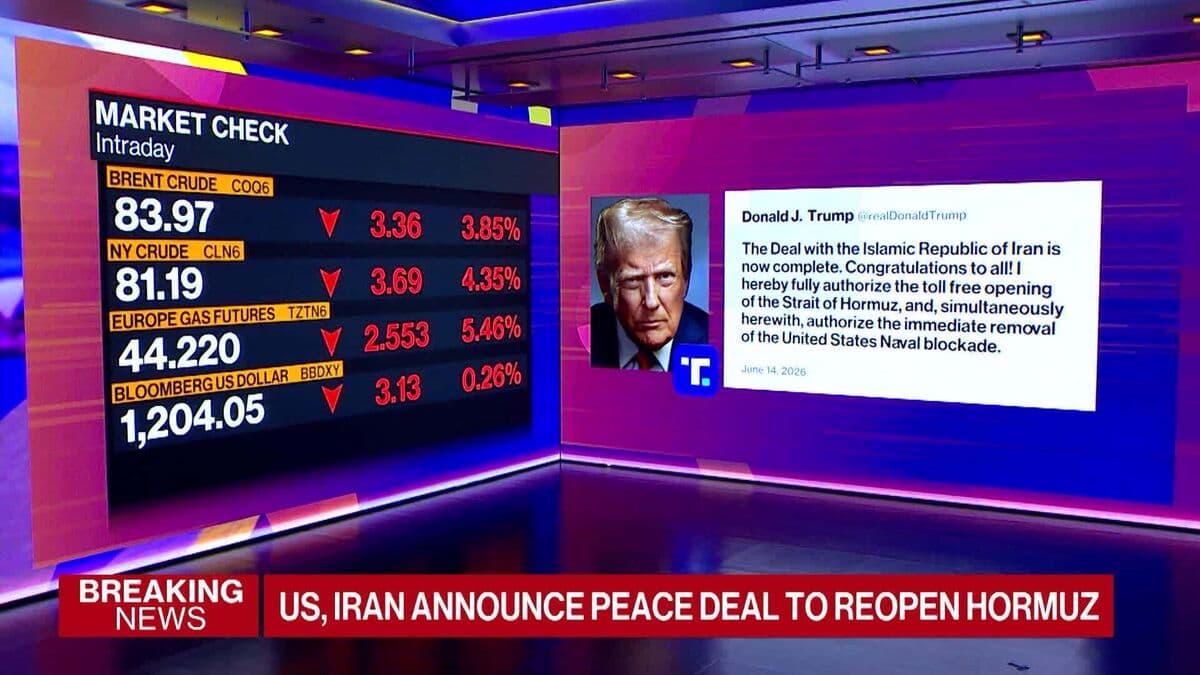
US and Iran Reach Historic Interim Agreement to Halt War
In a development that has stunned diplomats, energy markets, and civilians across the Middle East and beyond, the United States and Iran have reached an interim agreement designed to halt an ongoing conflict that claimed thousands of lives. The deal, which centers on reopening the strategically critical Strait of Hormuz, marks one of the most significant geopolitical breakthroughs of recent years and sets the stage for broader negotiations over Iran's nuclear program. For a region long defined by tension and brinkmanship, this agreement — however fragile — represents a turning point that the entire world will be watching closely.
What Is the Strait of Hormuz and Why Does It Matter?
To understand the full weight of this agreement, it is essential to grasp the strategic importance of the Strait of Hormuz. This narrow waterway, sitting between the Persian Gulf and the Gulf of Oman, is one of the most critical maritime chokepoints on the planet. Roughly 20 percent of the world's oil supply passes through these waters every single day, making the strait a linchpin of global energy security.
When the strait is threatened, disrupted, or closed, the consequences ripple outward immediately. Oil prices surge. Supply chains fracture. Nations dependent on Persian Gulf energy exports — from Europe to Asia — feel the pressure within days. During the conflict between the US and Iran, control of and access to the Strait of Hormuz became a central flashpoint, with both military operations and economic warfare playing out in its waters. Reopening the strait as a condition of this interim agreement is therefore not merely symbolic — it is an economic and strategic lifeline for the broader global community.
Key Terms of the US-Iran Interim Agreement
While full details of the agreement are still emerging, the core framework reported by Bloomberg establishes two primary pillars:
- Reopening of the Strait of Hormuz: Both parties have agreed to conditions that allow the free and safe passage of commercial and energy vessels through the strait, effectively ending the naval standoffs and attacks that had paralyzed maritime trade in the region.
- A pathway to nuclear negotiations: The interim deal explicitly sets the stage for follow-on talks about Iran's nuclear program, suggesting that both Washington and Tehran are willing — at least provisionally — to explore a diplomatic resolution to one of the most contentious geopolitical issues of the past two decades.
It is worth noting that this is described as an interim agreement, not a permanent peace treaty. The term "interim" signals that significant and difficult negotiations still lie ahead. Both governments will face intense domestic political pressure as they move toward any more comprehensive settlement, and hardline factions on both sides are already likely positioning themselves in opposition.
The Human Cost That Made This Deal Necessary
Any analysis of this agreement must be grounded in the staggering human cost of the conflict it is designed to end. Thousands of people were killed in the fighting — soldiers and civilians alike — and countless more were displaced, injured, or left without access to basic necessities as the conflict disrupted infrastructure across the region. The economic damage compounded the human tragedy, with sanctions, blocked trade routes, and destroyed supply chains driving up the cost of food, fuel, and medicine for ordinary people far beyond the immediate theater of war.
These losses have added moral urgency to the diplomatic push. When the human toll becomes undeniable, political leaders on both sides often find more room to maneuver domestically. The agreement, whatever its limitations, reflects that reality.
Implications for Iran's Nuclear Program
Perhaps the most consequential long-term dimension of this agreement is what it signals about Iran's nuclear ambitions. For years, Iran's nuclear program has been a source of profound concern for the United States, Israel, and Western allies, who have feared that Tehran was working toward developing a nuclear weapon — a charge Iran has consistently denied, insisting its program is for civilian energy purposes.
Numerous rounds of negotiations under frameworks like the Joint Comprehensive Plan of Action (JCPOA) attempted to address these concerns, with mixed and ultimately incomplete results. This new interim agreement now opens a fresh diplomatic window — one that, if handled carefully, could lead to a durable arrangement limiting Iran's nuclear capabilities in exchange for sanctions relief and international reintegration.
The path will not be easy. Verification mechanisms, enrichment limits, and the sequencing of sanctions relief versus compliance steps are all deeply contentious issues. But the fact that both sides have returned to the table at all, after a period of active armed conflict, is itself a significant development.
Global Reactions and What Comes Next
World leaders, international organizations, and energy markets have all responded to the news with a mixture of cautious optimism and watchful uncertainty. Oil prices, which had spiked sharply during the conflict, began to ease on the news of the agreement, reflecting market expectations that Persian Gulf supply routes would stabilize. Allied nations in Europe and Asia — many of whom had been quietly pushing for de-escalation — welcomed the deal while urging both parties to move swiftly toward a more permanent resolution.
The United Nations and key regional actors will likely play important roles in monitoring compliance and facilitating the next phase of negotiations. Regional powers including Saudi Arabia, Israel, and the Gulf states will each bring their own interests and anxieties to bear on how these talks unfold.
A Fragile but Meaningful Step Forward
The US-Iran interim agreement to halt the war and reopen the Strait of Hormuz is, above all, a reminder that even the most entrenched conflicts contain within them the possibility of resolution. It is not a guarantee of lasting peace. History offers too many examples of ceasefires that collapsed, deals that unraveled, and negotiations that went nowhere. But it is a beginning — one forged under the weight of enormous human suffering and shaped by the pragmatic recognition that continued war serves neither side's fundamental interests.
The world will be watching carefully as both nations attempt to turn this fragile interim arrangement into something more durable. The stakes — for regional stability, for global energy security, and for the future of nuclear nonproliferation — could hardly be higher.