
Xi's Summit with Kim Jong-un: What the Neighborhood Is Really Thinking
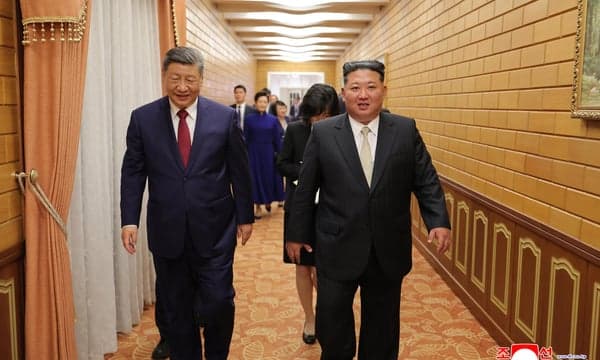
When Chinese President Xi Jinping made his much-anticipated visit to Pyongyang to meet with North Korean leader Kim Jong-un, the world watched closely. Analysts in Seoul, Tokyo, Washington, and Moscow scrambled to decode what the summit meant, what concessions had been exchanged, and how the regional balance of power might shift. But as the dust settled, one conclusion emerged with striking clarity: it was Kim Jong-un, not Xi Jinping, who walked away with the upper hand. By keeping his neighbors guessing and refusing to offer any meaningful concessions, Kim turned a diplomatic occasion into a quiet but decisive strategic victory.
The Summit in Context: Why This Meeting Mattered
High-level summits between Chinese and North Korean leaders are never merely ceremonial. Every handshake, every carefully worded joint statement, and every conspicuous absence of language carries enormous weight for countries that share borders or security concerns in Northeast Asia. The Xi-Kim summit was no exception. It took place against a backdrop of escalating tensions on the Korean Peninsula, continued North Korean missile tests, and an increasingly complex web of great-power competition that has drawn in the United States, Japan, South Korea, and Russia.
For China, the visit offered an opportunity to reassert its role as the indispensable patron of Pyongyang and to signal to Washington and its regional allies that Beijing retains significant influence over North Korean behavior. For Kim, the visit offered something different and arguably more valuable: international legitimacy, a powerful neighbor's implicit endorsement, and the chance to reinforce his own negotiating position without giving anything away.
Reading the Room: Reactions Across the Region
The reactions from neighboring countries tell their own story. South Korea watched the summit with a mixture of concern and frustration. Seoul has long hoped that Beijing might use its economic leverage over Pyongyang to rein in North Korea's nuclear and missile programs. The summit offered little evidence that this was happening. Instead, the warm optics between Xi and Kim suggested that China's strategic interest in maintaining a buffer state outweighs any desire to denuclearize the peninsula on terms acceptable to South Korea or the United States.
Japan's response was similarly guarded. Tokyo remains acutely sensitive to North Korean missile activity, and Japanese officials have consistently pressed Beijing to do more to pressure Pyongyang. The summit did not generate any public commitments from North Korea to halt provocations, and that silence spoke volumes to Japanese policymakers trying to calibrate their own defense posture.
The United States, which has spent years trying to isolate North Korea diplomatically, viewed the summit as a setback in that broader effort. A highly visible meeting between the leaders of the world's most populous nation and one of its most sanctioned regimes undercuts the narrative of isolation that Washington has tried to build. Even if no major agreements were announced, the summit itself was a diplomatic win for Pyongyang simply by happening.
Kim's Strategic Calculus: Ambiguity as a Weapon
What makes Kim Jong-un's performance at this summit so noteworthy is precisely what he did not do. He made no concessions on nuclear weapons. He offered no timeline for denuclearization talks. He gave no reassurances to nervous neighbors about the pace or intent of North Korea's weapons development. Instead, he accepted the prestige of a visit from the leader of the world's second-largest economy while preserving complete freedom of action for himself going forward.
This kind of strategic ambiguity is a hallmark of North Korean diplomacy. By keeping every player in the region uncertain about his next move, Kim ensures that all of them — China, South Korea, Japan, and the United States — must continue to engage with him, or at least keep him in mind when making their own calculations. Uncertainty, in this context, is not a weakness. It is a source of leverage.
What This Means for Chinese Influence
The summit also raises uncomfortable questions about the true depth of Chinese influence over North Korea. For years, the conventional wisdom held that Beijing held the keys to Pyongyang's behavior because of its dominant share of North Korean trade and its ability to enforce or relax sanctions. The Xi-Kim summit, however, offers a more nuanced picture. China may provide economic lifelines, but Kim has shown repeatedly that he will not subordinate his security interests to Beijing's preferences. The summit may have looked like a demonstration of Chinese power, but it could equally be read as evidence that Kim has successfully domesticated his most powerful neighbor.
Regional Stability and the Road Ahead
For countries in Northeast Asia, the summit is a reminder that the Korean Peninsula remains one of the most unpredictable flashpoints in global geopolitics. Diplomacy between Beijing and Pyongyang does not automatically translate into reduced tensions or greater transparency about North Korea's intentions. If anything, it can entrench a dynamic where Kim plays his neighbors against one another while advancing his own agenda at his own pace.
South Korea, Japan, and the United States will need to coordinate more closely in the wake of the summit to avoid being outmaneuvered. China, for its part, will need to decide whether its long-term interests are better served by genuinely pressing Kim toward restraint or by continuing to provide the diplomatic cover that allows him to resist outside pressure so effectively.
Conclusion: The Quiet Winner in Pyongyang
In the careful theater of international diplomacy, appearances matter enormously. The image of Xi Jinping traveling to Pyongyang to meet Kim Jong-un was, on its surface, a portrait of Chinese power and regional influence. But a closer reading of the summit's substance — or lack thereof — suggests a different conclusion. Kim Jong-un accepted the prestige, offered nothing of strategic value in return, and left his neighbors as uncertain as ever about his intentions. In a summit designed to showcase Chinese influence, it was the North Korean leader who demonstrated the most sophisticated grasp of what diplomacy, at its sharpest, can achieve.