
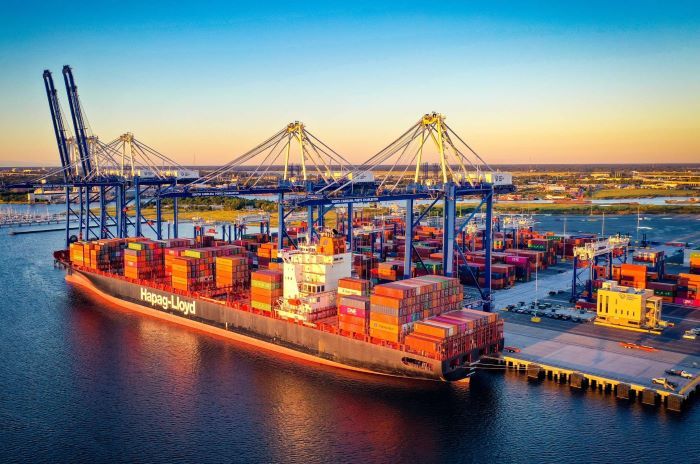
Charleston's Leatherman Terminal Set for a Short-Term Operational Pause by August 2026
South Carolina Ports Authority (SC Ports) has announced that the Hugh K. Leatherman Senior Terminal in Charleston will temporarily halt ship operations by August 2026. The decision, described by SC Ports as a "short-term pause," comes in response to a combination of economic pressures: an uncertain trade outlook for the second half of 2026 and an urgent need to reduce operating costs. While the news has raised eyebrows across the maritime and logistics industries, port officials are framing the move as a calculated, strategic step rather than a sign of deeper structural problems.
What Is the Leatherman Terminal?
The Hugh K. Leatherman Senior Terminal is one of the most modern container terminals on the East Coast of the United States. Located on the Cooper River in North Charleston, South Carolina, the terminal was purpose-built to handle the next generation of ultra-large container vessels. It features state-of-the-art infrastructure including automated rail-mounted gantry cranes, a deep berth capable of accommodating the world's largest ships, and a direct on-dock rail connection to inland markets.
Since its phased opening, the Leatherman Terminal has been positioned as a critical growth engine for South Carolina's port system. Its capacity and technological sophistication make it one of the most watched port facilities in North America, which is exactly why the decision to pause ship operations there — even temporarily — carries significant weight in the logistics world.
Why Is SC Ports Pausing Operations?
According to SC Ports, two primary factors drove the decision to suspend ship operations at Leatherman by August 2026.
1. An Uncertain Trade Outlook
The global trade environment heading into the second half of 2026 remains highly unpredictable. Ongoing geopolitical tensions, shifting trade policies, tariff volatility, and softening consumer demand in key markets have created a murky picture for container volumes. With cargo throughput projections for Q3 and Q4 of 2026 looking less robust than in prior years, SC Ports determined that operating two major terminal facilities simultaneously — the Leatherman Terminal and the Wando Welch Terminal — may not be economically justifiable in the near term.
2. The Need to Lower Operating Costs
Running a modern, technology-intensive terminal like Leatherman is an expensive undertaking even in the best of conditions. When cargo volume dips below efficient utilization thresholds, the cost-per-move increases dramatically. By consolidating operations to a single facility temporarily, SC Ports aims to improve operational efficiency and reduce fixed costs, preserving financial resources for when trade volumes rebound.
How Will This Affect Shippers and Carriers?
The short-term pause at Leatherman is expected to have ripple effects across the broader supply chain, particularly for ocean carriers and beneficial cargo owners (BCOs) who rely on the Port of Charleston as a key gateway.
- Ocean carriers that currently call at the Leatherman Terminal will need to redirect their vessel calls, likely to the Wando Welch Terminal or potentially other ports along the East Coast, depending on service agreements and berth availability.
- Importers and exporters using Charleston may experience adjustments in pickup and delivery windows, gate scheduling, and drayage logistics as the port consolidates its footprint.
- Intermodal shippers who depend on the Leatherman Terminal's on-dock rail connection to move containers inland will need to work with their logistics providers to establish alternative routing solutions during the pause period.
- Third-party logistics providers (3PLs) and freight brokers serving the Southeast U.S. market should proactively communicate with clients about potential timeline adjustments and alternative routing options.
That said, SC Ports has emphasized that the pause is temporary in nature. The port authority retains full capability to reactivate Leatherman operations quickly once trade conditions improve and cargo volumes warrant a return to full two-terminal operations.
The Broader Context: U.S. Ports Facing a New Normal
The Leatherman pause is not an isolated event. It reflects a broader recalibration happening across the U.S. port industry as authorities grapple with post-pandemic normalization, inventory corrections, and an increasingly complex global trade environment. Several major American ports have reported year-over-year volume fluctuations in 2025 and early 2026, and many port operators are making difficult decisions about how to right-size their operations for current market realities.
For SC Ports specifically, the decision reflects strong institutional discipline. Rather than continuing to bear the operational costs of running an underutilized terminal, the authority is choosing to consolidate strategically — a move that could actually strengthen its competitive position over time by maintaining financial health and operational agility.
What Comes Next for Charleston's Port System?
SC Ports has not indicated a specific reopening date for ship operations at Leatherman, but officials have been clear that the pause is not permanent. The port authority continues to invest in its long-term infrastructure and remains committed to growing Charleston as a premier East Coast gateway. Industry observers will be watching closely for signals that trade volumes are recovering and that the timeline for reactivating Leatherman is firming up.
For shippers, carriers, and logistics professionals, staying informed and maintaining flexible routing strategies will be essential in the months ahead. The Leatherman pause is a reminder that even the most modern and well-equipped port facilities are not immune to the forces of global trade uncertainty.
Key Takeaways
- SC Ports will temporarily suspend ship operations at the Leatherman Terminal by August 2026.
- The pause is driven by an uncertain trade outlook for the back half of 2026 and cost-reduction objectives.
- The move is described as a short-term measure, with full capacity reactivation possible when conditions improve.
- Shippers, carriers, and logistics providers should anticipate operational adjustments and plan alternative routing strategies.
- The decision reflects a broader trend of port authorities recalibrating operations to align with current global trade realities.
As the situation evolves, SC Ports is expected to provide additional guidance to industry stakeholders on how vessel calls, cargo flows, and terminal operations will be managed during the pause period. Businesses with supply chains running through Charleston should monitor official SC Ports communications closely and work proactively with their logistics partners to minimize disruption.