
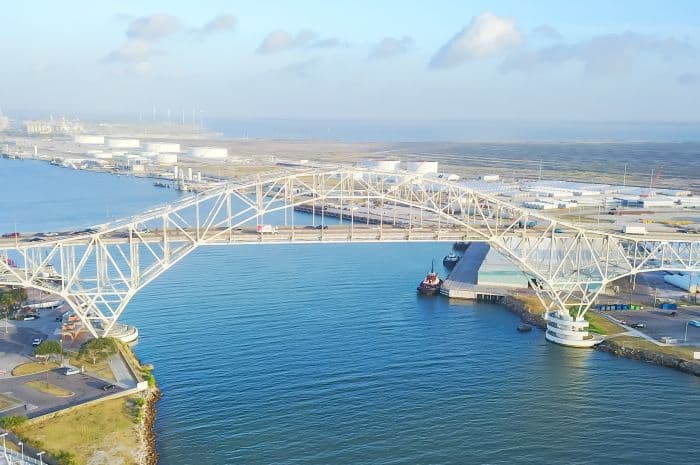
DP World Begins Formal Talks with Port of Corpus Christi Over New Container Terminal
Global logistics and port operator DP World has confirmed it is in active discussions with the Port of Corpus Christi in Texas to secure a long-term lease that would allow the Dubai-based company to construct a brand-new container terminal on the Gulf Coast. The move signals a significant vote of confidence in Corpus Christi's growing role as a major U.S. maritime hub, particularly following the successful completion of the port's ship channel deepening project.
If the negotiations result in a formal agreement, the development would mark one of the most consequential investments in Gulf Coast port infrastructure in recent memory, bringing one of the world's largest port operators directly into the heart of Texas's energy and trade corridor.
Why Corpus Christi? The Case for a Gulf Coast Container Hub
The Port of Corpus Christi has long been recognized as the leading crude oil export port in the United States, but its ambitions have always stretched beyond energy commodities. City and port leaders have invested heavily in infrastructure upgrades designed to attract diversified cargo and new shipping lines. The centerpiece of those efforts has been the deepening and widening of the Corpus Christi Ship Channel — a multi-year, federally backed project that has dramatically improved the port's ability to accommodate the largest class of modern container vessels.
With the channel now deepened to 54 feet, Corpus Christi can handle ultra-large container ships (ULCS) that were previously unable to call at the port fully loaded. This single improvement transforms the port's competitive position along the Gulf Coast, placing it in direct conversation with established container ports in Houston, New Orleans, and Mobile for a larger share of U.S. import and export container traffic.
For DP World, a company that already operates more than 80 marine and inland terminals across six continents, Corpus Christi represents an attractive greenfield opportunity in a market that has seen sustained demand for expanded container capacity — demand that was turbocharged by supply chain disruptions during and after the COVID-19 pandemic.
DP World's Growing Footprint in the Americas
DP World is no stranger to the American maritime market. The company operates container terminals in key North American ports and has continued to expand its presence in the Western Hemisphere. Its interest in Corpus Christi fits neatly into a broader strategic pattern of identifying high-growth, infrastructure-rich locations where long-term volume potential justifies significant capital investment.
A new container terminal in Corpus Christi would allow DP World to serve not only the immediate Texas market but also broader inland freight corridors connecting to major distribution centers, manufacturing hubs, and rail networks across the south-central United States. The region is home to a rapidly growing industrial base, including automotive manufacturing, petrochemical exports, and agricultural goods — all of which generate substantial container cargo.
The timing also aligns with a broader national conversation about diversifying U.S. port capacity and reducing dependence on a small number of congested gateway ports on the East and West coasts. Federal policymakers and logistics industry stakeholders have repeatedly called for investment in Gulf Coast and inland port infrastructure to create more resilient supply chains.
What a Long-Term Lease Would Mean for Corpus Christi
Securing a long-term lease agreement with an operator of DP World's caliber would be a landmark achievement for the Port of Corpus Christi Authority. Long-term terminal leases — often running 30 to 50 years — provide ports with the financial predictability needed to plan additional infrastructure investments, while giving terminal operators the security required to justify the substantial capital expenditure of building a new facility from the ground up.
The economic ripple effects for the wider Corpus Christi region could be substantial. New container terminals generate direct employment in terminal operations, maintenance, and logistics management. They also attract ancillary businesses such as freight forwarders, customs brokers, trucking companies, and warehouse operators, creating a broader ecosystem of trade-related jobs. Historically, the arrival of a major terminal operator has served as a catalyst for accelerated commercial development in port cities.
For local and state officials in Texas, a DP World terminal would also represent a strategic asset in the ongoing competition among U.S. Gulf ports to capture a greater share of Asian imports that are increasingly being routed away from West Coast ports through the expanded Panama Canal.
Key Factors That Will Shape the Outcome of Negotiations
While the commencement of talks is itself significant news, several factors will ultimately determine whether a formal lease agreement is reached. These typically include:
- Land availability and terminal design: DP World will need sufficient contiguous acreage to build a modern, automated container terminal with adequate yard space, berth capacity, and intermodal connections.
- Financial terms: Long-term lease negotiations involve complex discussions around minimum throughput guarantees, rent structures, capital investment commitments, and revenue-sharing arrangements.
- Regulatory and environmental approvals: Any new terminal construction at a U.S. port requires engagement with federal agencies including the Army Corps of Engineers, the U.S. Coast Guard, and the Environmental Protection Agency.
- Intermodal connectivity: The long-term commercial viability of a container terminal depends heavily on efficient rail and road access to inland markets.
The Bigger Picture: Gulf Coast Ports in the Global Supply Chain
DP World's interest in Corpus Christi is part of a wider realignment taking place across global shipping networks. As ocean carriers reconfigure their service strings and shippers seek greater geographic flexibility, secondary and emerging ports that offer modern infrastructure, competitive costs, and less congestion are winning business that was once concentrated in a handful of mega-ports.
The Gulf Coast, with its proximity to major North American manufacturing and consumption centers, its established energy export infrastructure, and its improving container capabilities, is increasingly seen by global operators as an underutilized asset with significant upside potential. DP World's move to begin formal discussions with Corpus Christi is a clear indication that some of the world's most sophisticated port investors share that view.
As negotiations progress, the shipping and logistics industry will be watching closely. A successful agreement between DP World and the Port of Corpus Christi could set a precedent for further private investment in Gulf Coast container infrastructure and accelerate the region's evolution into a true multi-commodity maritime powerhouse.