
Min Aung Hlaing's China Visit: What It Means for Myanmar's Political Future
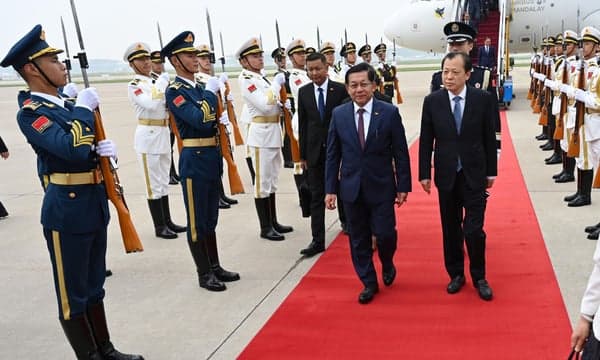
Myanmar's Senior General Min Aung Hlaing has embarked on his first official visit to China since his appointment as president of the country's military-backed civilian government. The trip carries enormous geopolitical weight, underscoring the enduring strategic and economic ties between Naypyidaw and Beijing at a time when Myanmar's internal stability remains deeply fragile. Despite reservations reportedly held within certain quarters of Myanmar's security establishment, this visit makes one thing unmistakably clear: China is not stepping back from Myanmar, and Myanmar cannot afford to step back from China.
The Significance of the Timing
Min Aung Hlaing's visit to Beijing comes at a particularly consequential moment. Since the military seized power in the February 2021 coup, Myanmar has been engulfed in a protracted civil conflict pitting the Tatmadaw against an ever-broadening coalition of resistance forces, including ethnic armed organizations and the People's Defence Force aligned with the shadow National Unity Government. International condemnation has been fierce, with Western nations imposing waves of sanctions and largely isolating the junta diplomatically.
Against this backdrop, China has remained one of the few major powers willing to engage with Myanmar's military leadership at the highest levels. Beijing has consistently refrained from echoing Western calls for the restoration of democracy, instead emphasizing non-interference in internal affairs and continuity of bilateral economic ties. The timing of this presidential-level visit signals that both sides are eager to consolidate that relationship under Myanmar's new governmental structure, even if international observers remain deeply skeptical of its democratic credentials.
China's Strategic Interests in Myanmar
To understand why China would maintain — and even deepen — its relationship with a government widely condemned on the world stage, one must appreciate the breadth of Beijing's strategic interests in the country.
Energy and Infrastructure Pipelines
Myanmar sits at the heart of China's connectivity ambitions. The China-Myanmar Economic Corridor (CMEC), a flagship component of the Belt and Road Initiative (BRI), envisions a network of roads, railways, pipelines, and special economic zones linking China's landlocked Yunnan Province to the Indian Ocean port of Kyaukphyu. The oil and gas pipelines that already traverse Myanmar provide China with a critical energy route that bypasses the strategically vulnerable Strait of Malacca. Any prolonged instability in Myanmar — or a government hostile to Chinese interests — directly threatens these assets. Beijing therefore has a powerful incentive to keep lines of communication open with whoever holds power in Naypyidaw.
Border Security and Ethnic Armed Groups
China shares a roughly 2,200-kilometer border with Myanmar, and several of the ethnic armed organizations operating along that frontier have historically maintained complex relationships with Beijing. Groups such as the United Wa State Army and the National Democratic Alliance Army are believed to receive varying degrees of tacit Chinese support, giving Beijing considerable leverage on the ground. At the same time, instability that spills across the border — through refugee flows, drug trafficking, or armed incidents — poses real security challenges for Yunnan Province. Engaging the central government in Naypyidaw, however flawed, remains Beijing's preferred mechanism for managing these border dynamics.
Geopolitical Rivalry with Western Powers and India
From Beijing's perspective, Myanmar is also a theater in the broader contest for influence in Southeast Asia. India, Japan, and Western nations have all sought to cultivate ties with Myanmar over the years, often framing engagement in terms of democratic development. China views deeper ties with the current government as a way to maintain a friendly neighbor on its southwestern flank and to limit the geopolitical footprint of rival powers in a country that borders both China and India.
Tensions Within Myanmar's Security Establishment
The source material hints at "misgivings" within Myanmar's own security establishment regarding the depth of engagement with China, and this internal tension is worth examining. A strand of nationalist sentiment within the Tatmadaw has long been wary of excessive dependence on Beijing, particularly around large-scale Chinese investment projects that critics argue benefit Chinese companies and workers more than Myanmar's population. There are also long-standing concerns about Chinese economic influence in northern Myanmar and the role Beijing plays in brokering — or failing to broker — ceasefires with powerful ethnic armed groups along the border. For some within the military hierarchy, closer alignment with China is a necessary pragmatism; for others, it risks compromising Myanmar's sovereignty and long-term national interests.
Yet whatever the internal debate, the structural realities of Myanmar's situation leave little room for alternatives. With Western markets largely closed off by sanctions, ASEAN partners keeping a cautious distance, and the economy under severe strain, China remains the most consequential external actor willing to engage the government on substantive terms.
What to Watch Going Forward
Observers of Myanmar-China relations will be watching this visit closely for several indicators. Key among them is whether the two sides announce new investment agreements under the CMEC framework, any progress on stalled infrastructure projects, and whether China offers any form of renewed diplomatic backing for Myanmar's standing in multilateral forums. Equally important will be whether Beijing uses its influence to push for even a modest reduction in violence — a measure that would serve China's own interest in border stability, even if it falls far short of the democratic accountability demanded by the international community.
Conclusion
Min Aung Hlaing's first visit to China as Myanmar's president is more than a diplomatic courtesy call. It is a reaffirmation of a partnership built on overlapping strategic interests that transcend the shifting tides of international opinion. For Beijing, Myanmar is too important — geographically, economically, and geopolitically — to abandon. For Naypyidaw, China is too central to its economic survival and diplomatic survival to alienate. Whatever tensions simmer beneath the surface on either side, this visit confirms that the Myanmar-China relationship will remain one of the defining bilateral partnerships shaping Southeast Asia's future, for better or worse.