
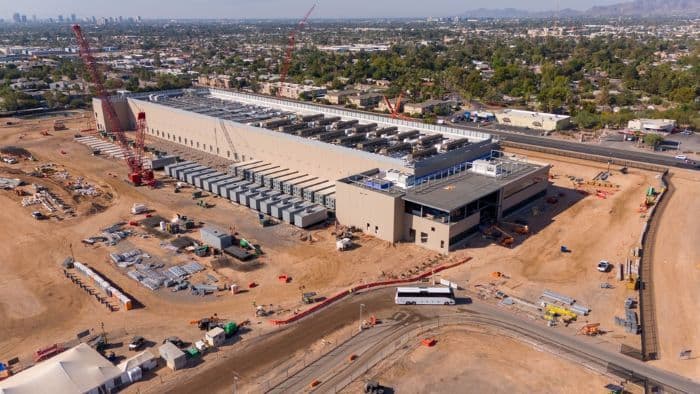
Trans-Pacific Air Cargo Surges as US Demand for Data Center Components Skyrockets
The global air freight industry is experiencing a dramatic realignment, and nowhere is this shift more visible than on trans-Pacific routes connecting Asia to North America. According to aviation consultancy Aevean, the volume of high-tech goods shipped from Asia to the United States soared by an extraordinary 70% year over year. The driving force behind this surge? An insatiable and rapidly growing American appetite for data center components — the physical hardware backbone of the artificial intelligence era.
This development marks a significant pivot in what moves through the world's most strategically important air cargo corridor. While e-commerce imports into the United States have declined, the slack has been more than absorbed — and then some — by a new class of industrial-grade technology shipments. Understanding this shift matters not just for logistics professionals, but for anyone tracking the economic ripple effects of the global AI infrastructure buildout.
What Is Driving the Surge in High-Tech Air Cargo?
At the heart of this freight boom is the explosive growth in artificial intelligence infrastructure investment across the United States. Hyperscale cloud providers, colocation operators, and enterprise technology companies have been locked in a race to expand data center capacity at an unprecedented pace. To do so, they need massive quantities of specialized hardware — GPU servers, custom AI accelerator chips, high-bandwidth networking equipment, power distribution units, and advanced cooling systems — much of which is designed and manufactured in Asia.
Countries such as Taiwan, South Korea, Japan, and increasingly Vietnam and Malaysia sit at the center of the global semiconductor and advanced electronics supply chain. As US companies scramble to bring AI infrastructure online as quickly as possible, air freight has become the preferred — and often only — viable mode of transport. Unlike ocean shipping, which can take weeks, air cargo delivers these time-sensitive components within days, enabling faster deployment of data center capacity and giving companies a critical competitive edge.
Why Air Freight Over Ocean Shipping?
The preference for air freight over sea freight in this sector comes down to a combination of urgency, value density, and supply chain risk management. Data center hardware is extraordinarily valuable relative to its weight and volume, making the premium cost of air cargo justifiable. A single pallet of GPU servers can represent millions of dollars in equipment, and the revenue a cloud provider loses for every week a new data center sits idle far exceeds the additional cost of flying that hardware across the Pacific.
Furthermore, supply chain disruptions experienced during the COVID-19 pandemic taught technology companies to prioritize speed and reliability over cost optimization when it comes to mission-critical components. The result has been a structural shift toward air freight for the highest-value segments of the electronics supply chain, a trend that shows no signs of reversing in the near term.
E-Commerce Declines While Industrial Tech Rises
One of the most telling aspects of Aevean's findings is the contrast between the growth in high-tech component shipments and the decline in US e-commerce imports via air cargo. For years, the trans-Pacific air freight market was significantly shaped by the high volume of small consumer goods shipped directly from Asian sellers to American consumers — a trade pattern heavily associated with platforms like Shein, Temu, and similar marketplace models.
The reduction in e-commerce air freight reflects a combination of factors: regulatory changes affecting low-value de minimis import exemptions, consumer demand normalization following post-pandemic shopping surges, and increased scrutiny of direct-from-China retail models. While this segment of air cargo contracts, it is being replaced by something far more valuable per kilogram and far more strategically significant — industrial-grade technology infrastructure hardware.
This transition represents a maturation of the trans-Pacific air cargo market. The shift from consumer goods to capital equipment signals that American businesses, not just American consumers, are now the dominant force shaping demand on these routes. For airlines and freight forwarders, this means adapting to different customer profiles, shipment characteristics, and service requirements.
Implications for Airlines and Freight Operators
The 70% year-over-year growth in high-tech cargo volumes has significant implications for airlines operating freighter and belly-cargo services across the Pacific. Capacity is under intense pressure, and carriers that have invested in widebody freighter fleets — or secured belly-hold contracts with major passenger airlines on high-frequency trans-Pacific routes — are well positioned to capitalize on this demand surge.
Charter freight operations have also seen increased activity, with technology companies and their logistics partners willing to pay premium rates to secure guaranteed capacity for large, time-critical shipments. Forwarders with deep expertise in managing high-value, high-security technology cargo, including proper handling of lithium-ion battery systems and temperature-sensitive electronics, are seeing strong demand for their services.
Geopolitical Factors Adding to Freight Complexity
The surge in data center component imports also takes place against a complex geopolitical backdrop. US-China trade tensions, export controls on advanced semiconductors, and supply chain diversification strategies are all influencing where components are manufactured and how they reach American shores. Many technology companies are actively working to source components from Taiwan, South Korea, and Southeast Asian nations to reduce concentration risk — and much of this hardware is moving via air freight to maintain the rapid deployment timelines that AI infrastructure projects demand.
What Comes Next for Trans-Pacific Air Cargo?
Looking ahead, the fundamentals driving this freight surge remain firmly in place. Investment in AI data centers by major US technology companies is projected to continue at an elevated pace through the remainder of the decade. The physical hardware required to build out this infrastructure must come from somewhere, and for the foreseeable future, a substantial portion of it will be manufactured in Asia and flown across the Pacific.
Airlines, freight forwarders, and logistics technology providers that align their capacity, expertise, and infrastructure to serve this demand will find themselves at the center of one of the most important supply chains of the 21st century. The trans-Pacific air cargo corridor has always been vital to global trade — but driven by the AI infrastructure boom, it is now more strategically significant than ever before.