
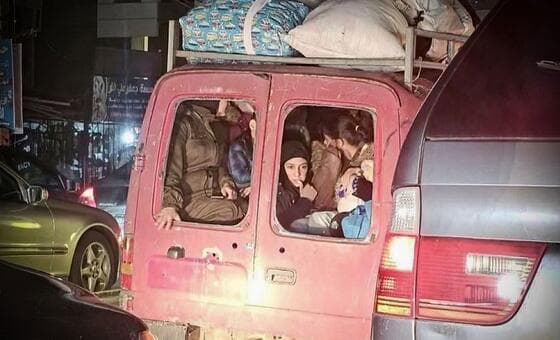
UN Welcomes Fresh Lebanon Ceasefire Reports Amid Ongoing Civilian Crisis
The United Nations has formally welcomed reports of a new ceasefire agreement between Israel and Hezbollah, offering a cautious but significant signal of potential relief for a region that has endured months of devastating conflict. However, senior UN officials have been careful to temper optimism with sobering reality: civilians across Lebanon continue to flee their homes amid persistent insecurity, and the path to lasting peace remains fraught with uncertainty. Simultaneously, independent human rights experts affiliated with the UN have amplified calls for accountability directed at Iran, whose role in the broader regional conflict has drawn sustained international scrutiny.
What the Ceasefire Agreement Means for Lebanon
A ceasefire between Israel and Hezbollah, the Iran-backed militant group and political movement based in Lebanon, would represent one of the most consequential diplomatic developments in the Middle East in recent months. The agreement, if it holds, could pause a military campaign that has killed thousands of people, displaced over a million civilians, and reduced entire neighborhoods in southern Lebanon and Beirut's southern suburbs to rubble.
The UN's measured welcome of the reported deal reflects both genuine hope and institutional caution. Previous ceasefires in the region have collapsed under the weight of mutual mistrust, continued provocations, and the complex web of political actors involved. United Nations peacekeepers already deployed in southern Lebanon under the UNIFIL mandate have witnessed firsthand how quickly fragile agreements can unravel, and how civilians pay the highest price when they do.
For Lebanese civilians, the announcement carries profound urgency. Hundreds of thousands of people have been internally displaced — many multiple times over — as strikes and counter-strikes have made large swaths of the country uninhabitable. Even with a ceasefire in place, humanitarian agencies warn that people are not yet returning home in significant numbers, citing fears of unexploded ordnance, destroyed infrastructure, and the absence of basic services like water, electricity, and healthcare in affected areas.
Civilians Still Fleeing Despite Ceasefire Reports
The UN's acknowledgment that civilians are still on the move even amid ceasefire discussions underscores a critical distinction: the announcement of a truce and the lived reality on the ground are very different things. Displacement does not end the moment a political agreement is signed. Families who have lost their homes, livelihoods, and communities cannot simply reverse course overnight.
UN agencies, including the United Nations High Commissioner for Refugees (UNHCR) and the World Food Programme (WFP), have been scaling up operations in Lebanon to meet an escalating humanitarian need. Food insecurity, trauma, and the breakdown of social services have created compounding crises that will require sustained international attention and funding well beyond any immediate ceasefire.
- More than one million people have been displaced within Lebanon since the escalation of hostilities.
- Significant portions of southern Lebanon and Beirut's southern suburbs have suffered severe infrastructure damage.
- Humanitarian agencies report critical shortages of food, medicine, and shelter materials in affected regions.
- Unexploded ordnance continues to pose life-threatening risks to civilians attempting to return to their villages.
The UN Office for the Coordination of Humanitarian Affairs (OCHA) has emphasized that humanitarian access must be guaranteed as part of any durable ceasefire arrangement, and that the protection of civilian infrastructure — including hospitals, schools, and water systems — must be treated as non-negotiable under international humanitarian law.
Rights Experts Call for Iran Accountability
Running parallel to the ceasefire diplomacy, independent human rights experts operating under the United Nations human rights system have issued pointed calls for accountability directed at Iran. These experts — who serve in their personal capacity and are not UN staff — have highlighted Iran's material and ideological support for Hezbollah as a factor that cannot be separated from the destruction wrought upon Lebanon's civilian population.
The calls for accountability are grounded in a broader legal and ethical framework. Under international law, states that provide weapons, funding, training, or other forms of support to non-state armed groups may bear responsibility for violations of international humanitarian law committed by those groups. The experts argue that a comprehensive accountability process must examine not only the actions of parties directly engaged in fighting, but also the networks that enable and sustain those actors.
Iran has consistently denied direct operational control over Hezbollah's military decisions, characterizing its relationship with the group as one of ideological solidarity rather than command and control. However, human rights organizations and Western governments have documented extensive Iranian support for Hezbollah over decades, including the supply of precision-guided missiles and other advanced weaponry.
The Broader Regional Context
The Lebanon conflict does not exist in isolation. It is deeply intertwined with the ongoing war in Gaza, the broader tensions between Israel and Iran, and a regional order that has been under severe strain since October 2023. Hezbollah opened a so-called "support front" against Israel in solidarity with Hamas, drawing Lebanon into a confrontation that many Lebanese — including communities within Hezbollah's own traditional support base — did not choose and did not want.
The international community, including the Arab League, European Union, and United States, has consistently called for a diplomatic resolution that respects Lebanon's sovereignty and prevents the country from being used as a battleground for proxy conflicts. Lebanon's own fragile state institutions, already weakened by years of political paralysis and economic collapse, are wholly ill-equipped to absorb the shock of sustained military confrontation.
What Comes Next
The coming days will be critical in determining whether the reported ceasefire takes hold or fractures like those before it. The United Nations, regional mediators, and key international stakeholders will be watching closely for signs of compliance from all parties. Humanitarian agencies are preparing for multiple scenarios — including a potential resumption of hostilities — while simultaneously working to accelerate aid delivery during any window of reduced fighting.
For the people of Lebanon, who have endured so much over so many years, a genuine and lasting ceasefire would be a first step — not an endpoint. Reconstruction, accountability, and the restoration of a functioning state remain enormous challenges that will demand political will, international resources, and above all, a commitment to placing civilian lives at the center of every decision made in the days ahead.