
Garmin Forerunner 170 vs Garmin Forerunner 265: Which Running Watch Is Right for You?
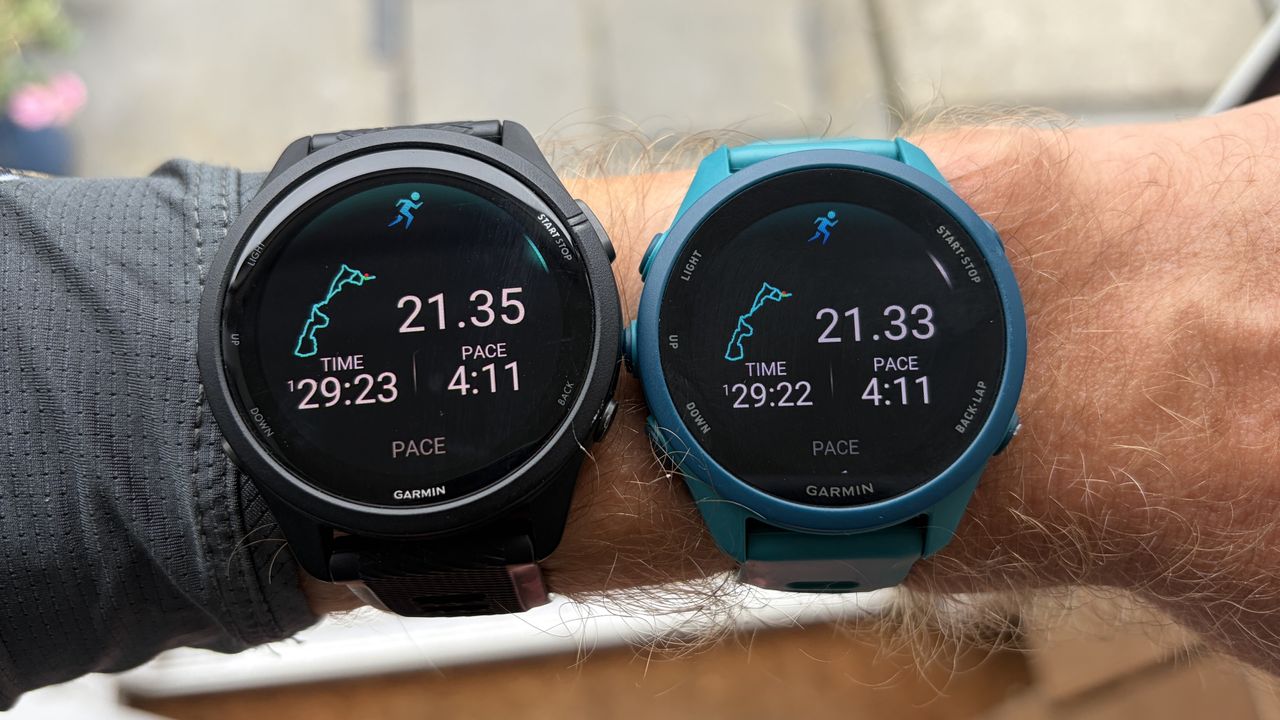
Choosing between a budget-friendly GPS watch and a feature-packed performance tracker is one of the most common dilemmas facing runners today. Garmin has long dominated the running watch market, and two of its most talked-about models — the Garmin Forerunner 170 and the Garmin Forerunner 265 — sit at very different points on the price and features spectrum. To find out which truly delivers on race day, we strapped on both watches and ran a half marathon. Here's everything you need to know.
Meet the Contenders: Garmin Forerunner 170 and Forerunner 265
Before diving into the head-to-head comparison, it's worth understanding what each watch is designed to do and who it's designed for.
The Garmin Forerunner 170 is Garmin's entry-level GPS running watch, engineered to give casual runners and beginners reliable GPS tracking, heart rate monitoring, and basic coaching features without overwhelming complexity or a high price tag. It's lightweight, approachable, and intentionally simple.
The Garmin Forerunner 265, on the other hand, is a mid-to-high-range running watch aimed at serious and competitive runners. It features a stunning AMOLED display, advanced training metrics, multi-band GPS, and deep integration with Garmin's ecosystem of health and performance tools. It costs significantly more, but promises substantially more in return.
Design and Comfort Over 13.1 Miles
Over the course of a half marathon, comfort matters more than most runners expect. The Forerunner 170 is noticeably lighter and more compact, making it feel almost invisible on the wrist during long runs. Its silicone band sits cleanly without irritation, and the modest display size keeps bulk to a minimum. For runners who find chunky sports watches distracting or uncomfortable, the 170 is genuinely pleasant to wear.
The Forerunner 265 is slightly heavier and larger, but Garmin has clearly invested in ergonomic design. The watch feels premium rather than bulky, and the AMOLED display is a revelation — crisp, bright, and easy to read at a glance even in direct sunlight or low-light morning runs. By mile ten, neither watch felt like a burden, though runners with smaller wrists may consistently prefer the 170's slimmer profile.
GPS Accuracy and Tracking Performance
This is where the two watches diverge most significantly. The Forerunner 265 uses multi-band GPS, which captures satellite signals across multiple frequencies simultaneously. In practical terms, this means far more reliable tracking in urban environments with tall buildings, dense tree cover, or tunnels — conditions that routinely fool single-frequency GPS watches.
The Forerunner 170 uses standard GPS, which is perfectly adequate on open roads or trails with clear sky visibility. During our half marathon on a mixed urban and park course, the 170 performed respectably, though it showed minor inaccuracies through tree-lined sections and an underpass. The 265, by contrast, maintained a consistently tight and accurate track throughout the entire route.
For runners who train primarily on open routes, the 170's GPS will rarely let you down. For city runners or those who demand race-level precision, the 265's multi-band system is a meaningful upgrade.
Heart Rate Monitoring and Health Metrics
Both watches include optical wrist-based heart rate monitoring, and both performed solidly during steady-state running. The Forerunner 265 edges ahead during high-intensity intervals and sprint finishes, where it responded to heart rate changes more quickly and accurately — a detail that matters for runners using heart rate zones to guide their training.
Beyond basic heart rate, the 265 offers a much richer suite of health and performance metrics, including:
- Training Readiness scores that aggregate sleep, HRV, and recovery data
- Running Dynamics (cadence, vertical oscillation, ground contact time) when paired with a compatible accessory
- Race Predictor and Daily Suggested Workouts powered by Garmin's AI coaching engine
- Morning Report, which gives you a personalized fitness briefing each day
- Wrist-based pulse oximetry and stress tracking
The Forerunner 170 covers the essentials — heart rate, pace, distance, cadence, and basic workout summaries — but stops well short of the 265's analytical depth. For data-driven runners, the 265's metrics ecosystem is genuinely transformative.
Battery Life: Can They Both Finish the Race?
For a half marathon, battery life is unlikely to be a dealbreaker for either watch. The Forerunner 170 offers around 18 hours in GPS mode, comfortably enough for anything from a 5K to a marathon. The Forerunner 265 provides approximately 13 hours with the AMOLED display active in GPS mode, which extends significantly if you drop to a lower-power display mode. Both watches will get you to the finish line without anxiety.
Price and Value: Who Should Buy Which Watch?
The Forerunner 170 typically retails at a notably lower price point, making it an excellent entry point for newer runners or those who want reliable GPS tracking without spending heavily. The Forerunner 265 costs roughly twice as much, a gap that's only justified if you actively use advanced training features.
If you run three or more times per week, follow structured training plans, or are preparing for competitive races, the Forerunner 265's deeper insights will genuinely improve your training. If you're building a habit, running for fitness, or simply want a reliable watch to track your miles, the Forerunner 170 delivers exceptional value.
Final Verdict: Garmin Forerunner 170 vs 265
Both watches are excellent running companions, and Garmin deserves credit for the quality it delivers at both price points. The Forerunner 170 wins on simplicity and value — it's the right watch for casual runners who want dependable tracking without the complexity or cost of a performance device. The Forerunner 265 wins on performance, accuracy, and depth — it's the right watch for dedicated runners who want their device to actively contribute to better training outcomes.
After a full half marathon with both on the wrist, the choice comes down to one honest question: are you running to finish, or running to improve? Your answer tells you exactly which Garmin belongs on your arm.