
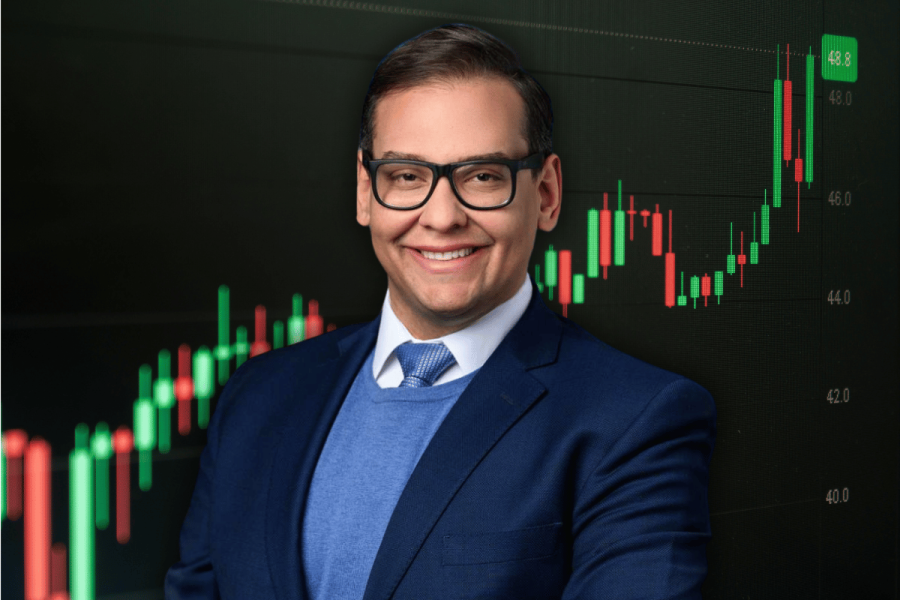
George Santos Denies Wrongdoing as Federal Scrutiny of Prediction Markets Grows
Former U.S. Representative George Santos is pushing back hard against allegations that he improperly profited from prediction-market trading, even as federal authorities reportedly examine activity linked to his account on Kalshi, one of the country's leading regulated prediction market platforms. The controversy arrives at a pivotal moment for the rapidly growing prediction market industry, which is facing mounting regulatory pressure and intensifying questions about its vulnerability to insider trading and political manipulation.
Santos, who was expelled from Congress in December 2023 following a long list of scandals and a federal indictment, remains a polarizing figure in American political life. Now, fresh allegations connecting him to suspicious trading activity on political event markets are once again thrusting him into national headlines — and fueling a broader conversation about who exactly should be allowed to profit from betting on political outcomes.
What Santos Said in His Public Response
In a June 3 post on X, formerly known as Twitter, Santos stated that he first learned of a potential Department of Justice inquiry through media reports rather than through any direct contact from investigators. He emphasized that his legal team had already reached out to federal officials to seek clarification on the matter and confirmed that he would fully cooperate with any requests for information that came his way.
The statement was notable for its tone. Rather than mounting an aggressive defense or going on the offensive against accusers, Santos appeared measured and, at least on the surface, transparent. He denied benefiting improperly from any trades and framed the situation as one in which he was as surprised as anyone by the news of a possible investigation. Whether that posture holds as the situation develops remains to be seen, but it marks a different approach from some of his earlier public controversies, where he was often far more combative.
Santos's legal team has not issued a formal statement beyond what was referenced in his post, and the Department of Justice has not publicly confirmed or denied whether a formal investigation is underway.
What Are Prediction Markets and Why Does This Matter?
For those unfamiliar with how prediction markets work, the concept is relatively straightforward. Platforms like Kalshi allow users to place trades on the outcomes of real-world events — including elections, legislation, economic indicators, and other political developments. Traders who correctly predict outcomes profit; those who get it wrong lose their stakes. Proponents argue these markets aggregate information efficiently and produce accurate forecasts. Critics, however, have long raised concerns about their potential for abuse, particularly when politically connected individuals are involved.
Kalshi was granted federal regulatory approval by the Commodity Futures Trading Commission and has positioned itself as a legitimate, above-board venue for event-based trading. But the platform has found itself at the center of a growing controversy about whether individuals with political connections or non-public information can — or do — exploit these markets for personal gain.
The concerns are not limited to Santos. Across the prediction market landscape, watchdogs and lawmakers have begun asking harder questions about transparency, data access, and the potential for politically connected traders to act on information that ordinary retail participants simply do not have.
A Pattern of Controversy Around Political Event Trading
The Santos situation does not exist in a vacuum. Over the past year, prediction markets have attracted significant attention from regulators, academics, and journalists who are scrutinizing whether the line between informed trading and insider trading can be reliably enforced in markets tied to political events.
Several high-profile cases have raised red flags. Unusual spikes in trading activity ahead of major political announcements have been documented on multiple platforms, prompting calls for stricter oversight. Some critics argue that political insiders, lobbyists, staffers, or even former lawmakers carry structural informational advantages that make truly fair markets nearly impossible to achieve in the political arena.
- Prediction markets have grown dramatically in size and user base since receiving federal regulatory approval, with billions of dollars now flowing through platforms like Kalshi and Polymarket.
- Regulators are increasingly examining whether existing commodity trading rules are sufficient to govern political event markets or whether new, tailored legislation is needed.
- Several congressional members have called for outright bans on politically connected individuals participating in markets that bet on legislative or electoral outcomes.
- The CFTC has signaled it is monitoring activity on these platforms more closely than in previous years.
The Broader Regulatory Landscape for Prediction Markets
The timing of the Santos controversy matters because the prediction market industry is at something of an inflection point. After years of fighting for legitimacy and regulatory approval, platforms like Kalshi have achieved mainstream status. But that very success has brought scrutiny they may not have fully anticipated. The more money flows through these markets, and the more politically sensitive the events being traded on, the greater the risk that bad actors — or even well-intentioned ones who happen to know something others don't — will distort outcomes and erode public trust.
Lawmakers on both sides of the aisle have expressed interest in legislation that would either more tightly regulate who can trade on political markets or impose disclosure requirements similar to those that apply to congressional stock trading. The STOCK Act, which governs how members of Congress can trade on non-public information, has been frequently cited as a model for what expanded prediction market rules might look like.
What Comes Next for Santos and the Industry
For George Santos personally, the road ahead is complicated by his existing legal troubles. He pleaded guilty to federal fraud charges and has been awaiting sentencing, meaning any new federal scrutiny carries particularly high stakes. His cooperation posture, if genuine, could work in his favor — but the reputational damage of yet another controversy is difficult to quantify.
For the prediction market industry, the Santos story is both a cautionary tale and a stress test. The platforms themselves are not necessarily culpable if individual users engage in improper behavior, but how they respond — through enhanced monitoring, voluntary disclosures, or cooperation with investigators — will shape how regulators and the public ultimately judge them.
As federal authorities continue to explore the contours of this case, one thing is increasingly clear: prediction markets are no longer a niche curiosity. They are a major financial and political institution, and the rules governing them need to evolve accordingly. The George Santos episode, whatever its ultimate resolution, may prove to be the catalyst that pushes that evolution forward in a meaningful and lasting way.