
GM Energy Takes a Bold Step Toward a Smarter, Cleaner Electric Grid
General Motors has never been shy about doubling down on its electric vehicle ambitions, even as the broader EV market has faced its share of headwinds. After a surge in EV purchases ahead of expiring federal financial incentives drove a temporary spike in sales, demand pulled back sharply — leaving many in the automotive industry reassessing timelines and expectations. Despite that turbulence, GM is pressing forward, and the company's latest announcements around GM Energy signal just how seriously it is taking its role not only as an automaker, but as a player in the broader energy ecosystem.
At a recent GM event held in San Francisco, the company revealed two significant developments: expanded vehicle-to-grid (V2G) support through GM Energy, and a new partnership with Peak Energy focused on sodium-ion battery chemistry for standalone grid energy storage. Together, these moves represent a meaningful shift in how GM sees its vehicles and energy products fitting into America's evolving electric infrastructure.
What Is Vehicle-to-Grid (V2G) and Why Does It Matter?
Most people are familiar with the idea of charging an electric vehicle from the grid, but V2G technology flips that relationship. With bidirectional charging capability, an EV's battery pack can send electricity back to the grid during periods of high demand, effectively turning every compatible vehicle into a distributed energy resource. This concept has enormous implications for grid stability, particularly as energy demand continues to climb.
The timing of GM's announcement is no coincidence. The rapid expansion of artificial intelligence infrastructure — particularly data centers — is placing unprecedented pressure on the United States' electric grid. These facilities consume massive amounts of power around the clock, and utilities are scrambling to keep up with demand. By enabling V2G functionality through GM Energy, the automaker is positioning its EV fleet as part of the solution rather than part of the problem.
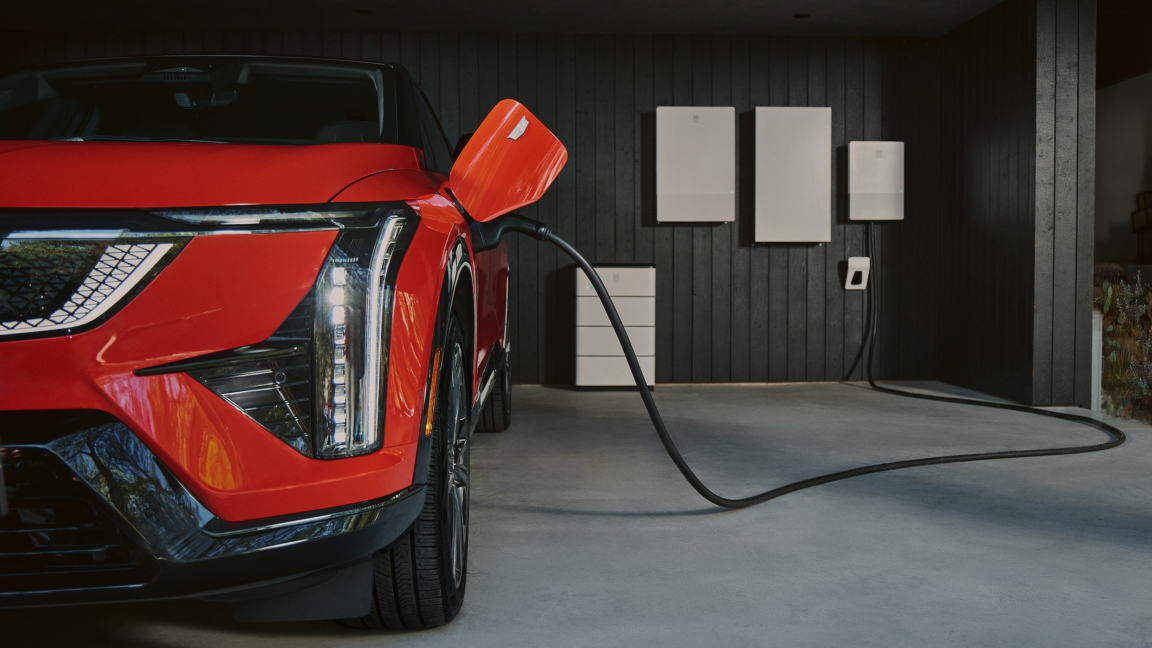
GM Energy's V2G support builds on the company's existing vehicle-to-home (V2H) capability, which already allows compatible EVs to power a residence during an outage or off-peak hours. Extending that functionality to the grid itself requires a more complex layer of coordination with utility providers, including metering, safety protocols, and dynamic pricing agreements — all of which GM is actively working through with its launch partners.
Launch Partners: PG&E and DTE Energy Lead the Way
GM has announced two key utility partnerships to bring its V2G vision to life. In California, the company is working with Pacific Gas and Electric (PG&E), one of the largest investor-owned utilities in the country and a state that has long been at the forefront of clean energy policy. In Michigan, GM's home state, the company is partnering with DTE Energy to pilot grid integration programs that could serve as a model for broader national rollout.
These partnerships are critical because V2G is not something an automaker can deliver unilaterally. Utilities control the infrastructure through which energy flows, and their participation is essential for creating the two-way communication channels that make bidirectional energy transfer both safe and economically viable for vehicle owners. For consumers, the appeal of V2G extends beyond environmental benefits — it also offers the potential to generate revenue or receive bill credits by selling stored electricity back to the grid during peak demand periods.
Working with established utilities like PG&E and DTE Energy also helps GM navigate the complex regulatory landscape that governs grid interconnection. Each state has its own rules around net metering, distributed energy resources, and utility rate structures, making these localized partnerships a smart starting point before scaling nationwide.
Sodium-Ion Batteries: A New Chemistry for Grid Energy Storage
Beyond V2G, GM Energy is also expanding its standalone energy storage offerings with a significant announcement: a new partnership with Peak Energy to develop sodium-ion batteries specifically designed for grid-scale storage applications. This is a notable departure from the lithium-ion chemistry that has dominated both EV batteries and stationary storage for the past decade.
Sodium-ion batteries offer several compelling advantages for stationary grid storage. Sodium is far more abundant and geographically distributed than lithium, which means supply chains are less vulnerable to geopolitical disruption and raw material price volatility. Sodium-ion cells also tend to perform well across a wider range of temperatures and are generally considered safer from a thermal runaway perspective, making them attractive for large-scale deployments.
While sodium-ion technology has not yet matched lithium-ion on energy density — which is why it is less suited for mobile applications like EVs — that limitation matters far less when batteries are sitting in a fixed location on the grid. For utility-scale and community-level storage, what matters most is cost, safety, longevity, and cycle stability, all areas where sodium-ion chemistry shows genuine promise.
Why This Matters for the Future of Energy
Taken together, GM Energy's V2G expansion and its sodium-ion battery partnership paint a picture of a company that is thinking beyond the vehicle. As the energy grid becomes more decentralized and more reliant on intermittent renewable sources like wind and solar, the need for flexible, distributed storage becomes critical. GM's EV fleet — paired with smart bidirectional charging infrastructure — could serve as a massive, geographically distributed battery network that helps smooth out the peaks and valleys of renewable energy generation.
The partnership with Peak Energy on sodium-ion chemistry, meanwhile, opens a pathway toward more affordable and resilient fixed storage solutions that complement rather than compete with EV-based grid resources. Together, these two tracks reflect a coherent long-term strategy: use the vehicle as an energy asset, and back it up with purpose-built storage where vehicles cannot reach.
GM's EV Strategy: Staying the Course
Despite a challenging period for EV demand, GM has made clear it has no intention of retreating from its electrification commitments. The company continues to expand its EV lineup across multiple brands, and announcements like those from GM Energy suggest that the automaker is working to build an ecosystem around its electric vehicles — not just selling cars, but delivering integrated energy solutions. Whether V2G and sodium-ion storage become mainstream in the near term will depend on regulatory progress, utility cooperation, and consumer adoption, but GM appears committed to doing the groundwork to make that future possible.