
Indonesia's Counterterrorism Landscape: A Delicate Balance of Power
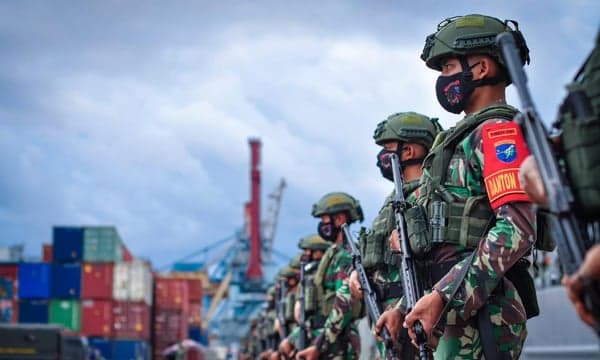
Indonesia has long been regarded as one of Southeast Asia's most significant battlegrounds in the global fight against terrorism. From the devastating Bali bombings of 2002 to more recent attacks linked to Islamic State-affiliated networks, the country has faced persistent and evolving threats. In response, the Indonesian National Armed Forces — known by their Indonesian acronym TNI (Tentara Nasional Indonesia) — have played an increasingly visible role alongside civilian law enforcement agencies. But as policymakers consider expanding that role further, a critical question emerges: how much military involvement is too much, and what are the consequences of getting that balance wrong?
Understanding TNI's Historical Role in Counterterrorism
Historically, counterterrorism operations in Indonesia have been led by the National Police and its elite unit, Detachment 88 (Densus 88), which was established with significant support from the United States and Australia following the 2002 Bali bombings. This civilian-led model was deliberate. After the fall of President Suharto in 1998, Indonesia underwent significant democratic reforms, including the formal separation of the military and police functions — a move designed to prevent the kind of overreach that had characterized the New Order era.
Despite this civilian-led framework, TNI has never been entirely absent from counterterrorism efforts. The military has contributed in various capacities, particularly in conflict zones such as Poso in Central Sulawesi and parts of Papua, where militant networks have exploited weak state presence. TNI's logistical reach, intelligence assets, and capacity for operations in remote or difficult terrain have made it a valuable supporting partner in these efforts.
These contributions have not gone unnoticed. Joint operations between TNI and Densus 88 have yielded tangible results, including the disruption of terrorist cells, the elimination of key figures, and the prevention of planned attacks. In this context, arguments for expanding TNI's formal counterterrorism mandate have gained traction among certain political and security circles.
The Case for Expanding TNI's Counterterrorism Role
Proponents of a greater TNI role point to several compelling arguments. First, Indonesia's geographical complexity — an archipelago of more than 17,000 islands — presents enormous challenges for any security apparatus. The police, despite their expanded capabilities, lack the resources and reach to effectively monitor and respond to threats across such a vast territory. TNI's infrastructure, particularly in remote regions, fills a gap that civilian agencies simply cannot.
Second, the nature of terrorist threats in Indonesia has evolved. Groups like Jamaah Ansharut Daulah (JAD) and Jamaah Islamiyah have demonstrated resilience, adapting their structures and tactics in response to law enforcement pressure. Some analysts argue that this evolving threat environment necessitates a more robust and militarized response — one that only TNI can credibly provide at scale.
Third, there is a regional dimension to consider. Terrorist networks operating in Indonesia have links to groups in the Philippines, Malaysia, and beyond. Military-to-military cooperation and intelligence sharing are often more effective at the regional level than police-to-police equivalents, and a stronger TNI counterterrorism mandate could enhance Indonesia's partnerships with neighboring states.
The Risks of Deeper Military Involvement
Yet the case for expansion must be weighed against a set of serious and well-documented risks. The most fundamental concern is one of democratic governance. Indonesia's post-reformasi identity has been built, at least in part, on the principle that the military should not encroach on civilian affairs. Granting TNI an expanded counterterrorism mandate risks reversing hard-won civil-military reforms and reopening questions about accountability, oversight, and human rights.
History provides a sobering backdrop. During the Suharto era, the military's dual function — known as dwifungsi — allowed it to operate across social and political domains with minimal accountability. The abuses that resulted remain a painful part of Indonesia's collective memory. Any expansion of TNI's role that is not accompanied by rigorous legal frameworks and civilian oversight mechanisms risks repeating those patterns in a new context.
There are also practical concerns about institutional coordination. Densus 88 and TNI have not always operated in harmony. Jurisdictional disputes, intelligence sharing failures, and competing institutional cultures can undermine the effectiveness of counterterrorism efforts when both agencies are active in the same space. Expanding TNI's role without clearly defined boundaries could exacerbate these tensions rather than resolve them.
Furthermore, over-militarization of counterterrorism can be counterproductive. Research on violent extremism consistently shows that heavy-handed military approaches can alienate communities, fuel grievances, and inadvertently support recruitment narratives used by extremist groups. A strategy that leans too heavily on TNI at the expense of community engagement, deradicalization programs, and police-led intelligence work risks undermining the very goals it seeks to achieve.
Toward a Smarter, More Accountable Framework
The path forward does not require a binary choice between civilian-led policing and military dominance. What Indonesia needs is a clearly defined, legally grounded, and oversight-rich framework that enables TNI to contribute meaningfully to counterterrorism without supplanting the civilian architecture that has proven effective.
This means establishing unambiguous legal thresholds that determine when and how TNI can be deployed in counterterrorism contexts. It means investing in inter-agency coordination mechanisms that reduce duplication and friction. It means strengthening parliamentary oversight to ensure that military involvement remains proportionate and accountable. And it means ensuring that softer, prevention-focused strategies remain at the core of Indonesia's counterterrorism approach.
Conclusion: Getting the Balance Right
Indonesia's counterterrorism record offers genuine cause for optimism, but it also illustrates just how fragile security gains can be when institutional arrangements are not carefully managed. TNI has a role to play — that much is clear. What remains unresolved is precisely how far that role should extend and under what conditions. Getting this balance right is not merely a technical question of security policy; it is a fundamental test of Indonesia's democratic maturity and its commitment to an accountable, rights-respecting approach to national security. The stakes, for Indonesians and for the broader region, could not be higher.