
Mongolia and Africa: Time to Reignite a Forgotten Partnership
When most people think of Mongolia's foreign policy, they picture the vast steppe nation navigating its complex position between two giant neighbors — Russia to the north and China to the south. Few would imagine that this landlocked Central Asian country once cultivated a web of warm, meaningful relationships with nations across the African continent. Yet that is precisely what happened during the Cold War era, and understanding that history is the first step toward asking a critical question: why haven't Mongolia and Africa picked up where they left off?
Today, as the global order continues to shift and both Mongolia and African nations seek new opportunities for economic diversification, diplomatic relevance, and multilateral cooperation, the case for reigniting this forgotten partnership has never been stronger. This is not merely a matter of nostalgia. It is a matter of strategic vision.
A Surprisingly Deep Cold War Connection
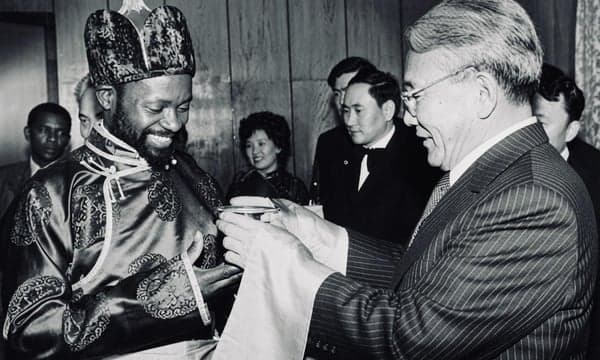
During the Cold War, Mongolia — then the Mongolian People's Republic — was a member of the Soviet-aligned socialist bloc. As part of that ideological family, it extended solidarity and recognition to African liberation movements and newly independent states across the continent. Mongolia established diplomatic relations with dozens of African countries through the 1960s and 1970s, often aligning itself with nations that had thrown off colonial rule and were charting independent paths.
These ties were not merely symbolic. Mongolia supported African nations at the United Nations, backed anti-apartheid resolutions, and participated in forums where the voices of newly decolonized states were beginning to be heard on the world stage. African students traveled to Ulaanbaatar for education and technical training. Mongolia, in turn, gained allies that helped amplify its diplomatic standing in international institutions where smaller nations often struggle to be heard.
The relationship was built on shared principles — solidarity among developing nations, opposition to colonialism, and a collective desire for a multipolar world less dominated by the Western powers. These were not trivial foundations. They reflected a genuine alignment of interests that transcended geography.
What Happened After the Cold War?
When the Soviet Union collapsed in 1991, Mongolia underwent a dramatic transformation. It transitioned to democracy and a market economy, pivoting its foreign policy toward what became known as the "third neighbor" strategy — cultivating relationships with Western democracies like the United States, Japan, and European nations to balance its dependence on Russia and China. In the process, its African relationships were largely set aside.
This was understandable given the circumstances. Mongolia faced urgent domestic challenges and needed to reorient itself quickly. Africa, meanwhile, was dealing with its own post-Cold War turbulence. The infrastructure of solidarity that had once connected the two simply atrophied through neglect rather than any deliberate rupture.
The result is that today, despite a long shared history, Mongolia and most African nations maintain only minimal diplomatic and economic engagement. This represents a missed opportunity for both sides — one that is increasingly difficult to justify given how much the global landscape has changed.
Why Now Is the Right Moment to Reconnect
Several converging forces make this an ideal time for Mongolia and Africa to rediscover each other.
Shared Economic Interests
Mongolia is a resource-rich nation sitting atop enormous reserves of coal, copper, gold, and rare earth minerals. Many African nations are similarly endowed with natural resources and are actively seeking development partners who bring different approaches than the dominant players — China, Western powers, and Gulf states — currently offering their engagement. Mongolia's experience navigating resource extraction agreements, managing sovereign wealth, and balancing foreign investment with national interests could offer genuinely useful insights for African counterparts. The exchange of expertise in mining governance, environmental management, and commodity-based economic development is a natural starting point for renewed cooperation.
Multilateral Diplomacy and Global Governance
Both Mongolia and African nations have strong incentives to champion a more multipolar, equitable international order. Mongolia has historically positioned itself as a neutral actor — it declared itself a nuclear-weapon-free zone in 1992 — and has cultivated a reputation as a constructive, non-threatening diplomatic presence. African nations, increasingly coordinating through the African Union, are pushing for greater representation in global institutions like the United Nations Security Council and the International Monetary Fund. A reinvigorated Mongolia-Africa diplomatic axis could amplify both parties' voices in multilateral settings.
Education, Culture, and People-to-People Ties
Rebuilding a partnership requires more than government-to-government agreements. Reviving scholarship programs, academic exchanges, and cultural diplomacy would lay the human groundwork for durable long-term ties. Mongolia's universities and technical institutions could offer relevant programming for African students in fields like veterinary science, environmental management, and engineering. These people-to-people connections are often the most resilient threads in any bilateral relationship.
Practical Steps Forward
Reigniting this partnership does not require grand gestures or enormous financial commitments. It begins with diplomatic re-engagement — reopening embassies in key African capitals, attending African Union summits as an observer, and signaling through consistent presence that Mongolia takes the relationship seriously. Trade missions, joint business forums, and memoranda of understanding in targeted sectors can follow.
Mongolia could also leverage its unique status as a small, landlocked, resource-dependent democracy to speak credibly in African forums about the challenges and opportunities that come with that profile. That credibility is itself a form of soft power.
A Partnership Worth Rebuilding
History shows that Mongolia and Africa once found genuine common ground despite the vast distance between them. The Cold War framework that first brought them together may be gone, but the underlying logic of South-South cooperation, multilateral solidarity, and mutual economic benefit remains entirely relevant. In a world where new partnerships are being forged at an accelerating pace, Mongolia and Africa have every reason to look back at what they once built — and decide, together, to build it again.