
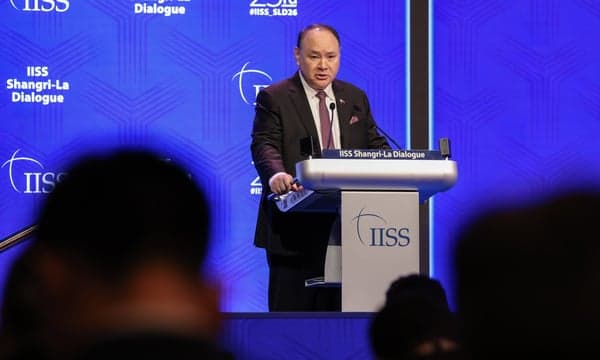
Philippine Defense Secretary Vows to Stand Firm After China Imposes Sanctions
Tensions between the Philippines and China have escalated sharply after Beijing imposed sanctions on Philippine Defense Secretary Gilberto Teodoro Jr., a move that Manila has swiftly condemned as divisive and counterproductive. The Philippine Department of Foreign Affairs (DFA) did not mince words, labeling the sanctions "an unfriendly act" that "further complicates" an already strained bilateral relationship. In response, Teodoro himself vowed to continue defending the nation's sovereign interests, signaling that Manila has no intention of backing down in the face of pressure from Beijing.
The development marks one of the most direct and personal escalations in the ongoing dispute between the two nations, which has long centered on rival territorial claims in the South China Sea. By targeting a sitting cabinet official by name, China has taken a step that analysts say crosses a diplomatic threshold, raising the stakes for both governments and drawing international attention to the deepening rift.
What the Sanctions Mean and Why They Matter
Sanctions imposed by China on foreign officials typically include measures such as asset freezes, travel bans, and restrictions on doing business with Chinese entities. While the precise scope of the measures against Teodoro has not been fully detailed, the symbolic weight of sanctioning a sitting defense secretary is significant. It represents Beijing's attempt to apply direct personal pressure on one of the key architects of the Philippines' increasingly assertive defense posture.
Teodoro has been a vocal and active figure in pushing back against what Manila describes as aggressive Chinese behavior in the South China Sea, particularly around disputed features such as the Second Thomas Shoal, where Philippine military and coast guard personnel have repeatedly clashed with Chinese vessels. His leadership of the Department of National Defense has coincided with a period of accelerated defense cooperation between the Philippines and the United States, including expanded access agreements and joint military exercises.
From Beijing's perspective, Teodoro is a central figure in what it characterizes as interference in China's internal affairs and a provocation in waters it claims as its own. The sanctions, then, are a clear message directed not just at one official but at the broader direction of Philippine foreign and defense policy.
Manila's Swift and Firm Diplomatic Response
The Philippine Department of Foreign Affairs wasted little time in issuing a strong rebuttal. By describing the sanctions as "an unfriendly act," the DFA invoked language that carries specific diplomatic weight, signaling official displeasure while stopping short of a full rupture in relations. The statement that the move "further complicates" bilateral relations also carries an implicit warning: that continued aggressive measures from Beijing will push the two countries further apart rather than compelling Manila to change course.
This response reflects a broader strategic calculation by the Philippine government under President Ferdinand Marcos Jr., who has steered the country toward a firmer stance on sovereignty issues compared to his predecessor, Rodrigo Duterte, whose administration pursued warmer ties with Beijing. The Marcos administration has consistently emphasized that the Philippines will not trade away its territorial rights for economic incentives, a message reinforced by the DFA's pointed condemnation of the sanctions.
The Broader Context: Philippines and China in the South China Sea
To understand why this moment is so charged, it is essential to appreciate the broader backdrop of Philippine-China relations. The South China Sea is one of the world's most contested maritime regions, with overlapping claims from the Philippines, China, Vietnam, Malaysia, Brunei, and Taiwan. China's expansive claims, outlined in its so-called nine-dash line, have been rejected by an international arbitration tribunal in a landmark 2016 ruling, though Beijing has refused to recognize the decision.
For the Philippines, the stakes are both strategic and economic. The waters in question are vital fishing grounds for Filipino communities and sit atop potentially vast reserves of oil and natural gas. More broadly, the Philippines views the defense of these areas as inseparable from its national sovereignty and dignity.
- Second Thomas Shoal: A flashpoint where Philippine vessels have repeatedly confronted Chinese coast guard and maritime militia ships attempting to block resupply missions to Filipino troops stationed there.
- Scarborough Shoal: Effectively seized by China in 2012 following a standoff with the Philippines, and a symbol of what Manila sees as Chinese expansionism.
- US-Philippines Alliance: Strengthened significantly in recent years, with Washington reaffirming that the Mutual Defense Treaty covers Philippine armed forces operating in the South China Sea.
Teodoro's Vow: Defiance as Policy
Rather than retreating in the face of Beijing's personal targeting, Defense Secretary Teodoro's vow to defend national interests signals that the sanctions have, if anything, hardened Manila's resolve. This is a pattern that has been observed repeatedly in the Philippine-China standoff: each act of pressure from Beijing tends to generate a stronger, more unified response from Manila rather than the capitulation China appears to be seeking.
Teodoro's position is also significant because it reflects a consensus that extends beyond one individual. Philippine military officials, lawmakers, and civil society groups have broadly rallied behind the government's assertive stance, making it politically difficult — and strategically unwise — for any administration to soften its posture under external duress.
International Implications and What Comes Next
The sanctioning of a sitting defense secretary is not an isolated event. It forms part of a broader pattern of Chinese pressure tactics deployed against governments that challenge its maritime claims or deepen security ties with the United States. Similar measures have been used against officials in other countries, often generating backlash rather than compliance.
For the international community, particularly Southeast Asian nations watching the Philippine-China dynamic closely, this episode sends a clear message about the risks and rewards of standing up to Beijing's pressure in the South China Sea. How Manila responds in the weeks and months ahead — diplomatically, militarily, and economically — will be closely watched as a signal of how smaller nations can navigate relationships with major powers without sacrificing their sovereign rights.
For now, the Philippine government's message is unmistakable: sanctions or no sanctions, Manila intends to defend what it regards as its sovereign territory, its people's livelihoods, and its national dignity — and no amount of external pressure will change that fundamental commitment.