
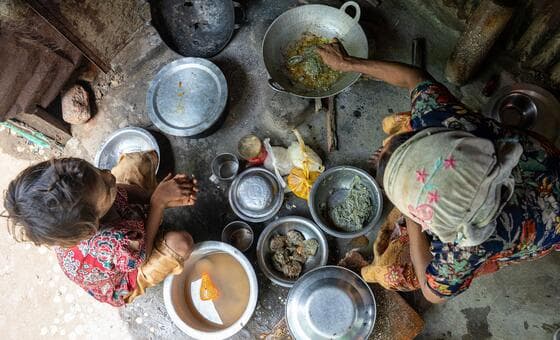
US Commits Over $1 Billion to UN Agencies Supporting Children and Food Security
In a landmark show of humanitarian commitment, the United States has made a combined contribution of more than $1 billion to two major United Nations agencies: UNICEF, the UN's children's rights organization, and the World Food Programme (WFP), the world's largest humanitarian organization fighting hunger. This substantial pledge is set to strengthen operations that reach millions of vulnerable children and food-insecure families spread across more than 40 countries worldwide.
The announcement has been warmly welcomed by both agencies, who rely heavily on voluntary government contributions to fund their life-saving work on the ground. At a time when global humanitarian needs are rising sharply due to conflict, climate change, and ongoing economic instability, the US contribution sends a powerful signal of continued American leadership in global development and aid.
Why This Contribution Matters on a Global Scale
The scale and reach of this financial commitment cannot be overstated. Both UNICEF and the WFP operate in some of the world's most fragile and conflict-affected regions, delivering essential services where governments are often unable to do so. From emergency nutrition programs in sub-Saharan Africa to child protection services in war-torn regions of the Middle East, these agencies serve as a critical lifeline for the world's most vulnerable populations.
According to the United Nations, approximately 733 million people around the world face hunger on a daily basis, while hundreds of millions of children are denied access to basic rights including healthcare, education, clean water, and protection from violence. Without sustained funding from major donor nations like the United States, the capacity of these organizations to respond to crises would be severely diminished.
The US contribution ensures that field teams can continue operating, supply chains for food and medicine remain functional, and long-term programs addressing chronic poverty and malnutrition can be maintained without disruption.
How the Funds Will Be Used by UNICEF and the WFP
UNICEF: Protecting the Rights of Every Child
UNICEF, formally known as the United Nations Children's Fund, will direct its portion of the contribution toward a broad range of programs designed to protect and promote the rights of children across the globe. Key areas of focus include:
- Child nutrition and health: Funding therapeutic feeding programs and vaccination campaigns in countries with the highest rates of child mortality and malnutrition.
- Education in emergencies: Ensuring children displaced by conflict or natural disaster continue to access quality education through temporary learning spaces and digital tools.
- Child protection: Scaling up programs that shield children from abuse, exploitation, trafficking, and recruitment into armed groups.
- Water, sanitation, and hygiene (WASH): Delivering clean water and improving sanitation infrastructure in communities facing severe shortages.
The United States has historically been UNICEF's single largest donor, and this latest contribution reinforces that partnership at a moment when global demand for child-focused humanitarian aid is at an all-time high.
World Food Programme: Fighting Hunger at the Front Lines
The World Food Programme, which was awarded the Nobel Peace Prize in 2020 for its efforts to combat hunger, will use its share of the US contribution to sustain and expand food assistance operations in more than 40 countries. The funding will support:
- Emergency food relief: Delivering ready-to-eat rations and nutritional supplements to communities affected by acute crises, including conflict zones and areas devastated by extreme weather events.
- School feeding programs: Providing daily meals to school-aged children, which not only addresses hunger but also incentivizes school attendance and improves learning outcomes.
- Resilience building: Investing in local food systems, small-scale agriculture, and community storage facilities to help populations withstand future shocks.
- Logistics and supply chain support: Maintaining the WFP's world-class humanitarian logistics infrastructure, which also assists other UN agencies during large-scale emergencies.
The United States' Role in Global Humanitarian Leadership
The United States has long been the world's largest contributor to international humanitarian assistance, a status that carries both enormous responsibility and significant diplomatic weight. By channeling more than $1 billion through multilateral institutions like UNICEF and the WFP, the US not only maximizes the efficiency and reach of its aid dollars but also reinforces its commitment to a rules-based international order centered on human dignity and multilateral cooperation.
Critics of foreign aid often question whether such spending serves American national interests. Proponents, however, argue convincingly that investing in global stability, reducing extreme poverty, and protecting children from preventable deaths directly contributes to a safer and more prosperous world — one in which the conditions that breed extremism, mass migration, and regional conflict are systematically addressed at their roots.
A Call for Continued International Support
While the US contribution is undeniably significant, humanitarian leaders at the UN have been clear: the needs far outpace the available funding. Both UNICEF and the WFP regularly face funding gaps that force them to make painful choices about which programs to scale back and which populations to deprioritize.
Other wealthy nations — particularly members of the G7 and the European Union — are being called upon to match or exceed their own previous commitments. A truly adequate response to the scale of global hunger and child vulnerability requires a coordinated, sustained, and generous international effort.
The $1 billion US contribution is a vital step forward, but it is best understood as part of a larger, ongoing effort to build a world where no child goes to bed hungry, and where every child's rights are upheld — regardless of where they are born.