
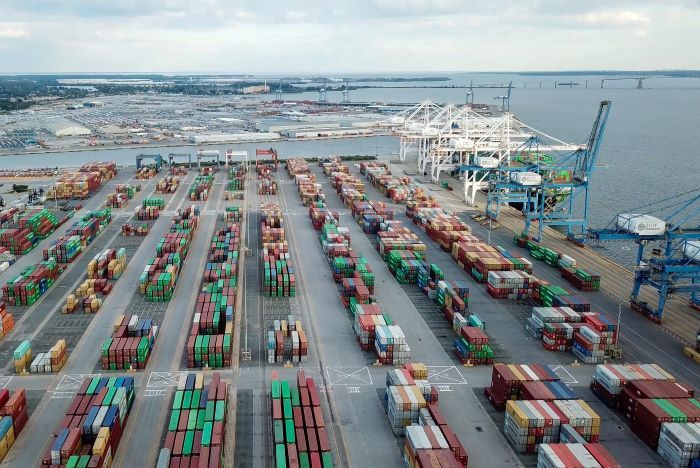
Baltimore Port Chief Jonathan Daniels Is Leaving for a New Role in Miami
In the world of maritime commerce and port management, leadership transitions carry significant weight. The Port of Baltimore is now facing one of those pivotal moments as Jonathan Daniels, its executive director, prepares to depart after just over two years on the job. Daniels is heading south to take on a new professional opportunity in Miami — and he's leaving behind a legacy that will be talked about for years to come. His tenure, though brief, was defined by one of the most dramatic and high-profile infrastructure crises in recent American history: the collapse of the Francis Scott Key Bridge.
Who Is Jonathan Daniels?
Jonathan Daniels stepped into the role of executive director at the Maryland Port Administration with a background in maritime operations and public port management. Taking the helm of one of the East Coast's most strategically important ports, he was expected to focus on growing cargo volumes, deepening trade relationships, and improving the facility's competitive position. What no one could have anticipated was that his leadership would be stress-tested almost immediately by an unprecedented catastrophe.
Daniels brought a steady, collaborative management style that proved essential during the crisis period that would come to define his time in Baltimore. Colleagues and state officials have noted his ability to work across multiple agencies simultaneously — a skill that became critically important when the port's main shipping channel was suddenly and violently blocked.
The Key Bridge Collapse: A Crisis That Defined a Career
In the early morning hours of March 26, 2024, a container ship lost power and struck the Francis Scott Key Bridge, causing the iconic structure to collapse into the Patapsco River. The disaster claimed several lives and immediately severed one of Baltimore's most vital transportation arteries. It also blocked the main channel into and out of the Port of Baltimore, effectively shutting down one of the nation's busiest cargo hubs overnight.
The economic stakes were enormous. The Port of Baltimore handles millions of tons of cargo annually and is responsible for thousands of jobs across the region. Every day the channel remained blocked represented tens of millions of dollars in lost trade and mounting pressure on supply chains across the country. The crisis demanded immediate, coordinated action at the local, state, and federal levels.
This is where Jonathan Daniels proved his worth. He became a central figure in the recovery effort, helping to coordinate the complex, large-scale operation to clear the wreckage, dredge the channel, and reopen the port to commercial traffic. Working alongside the U.S. Army Corps of Engineers, the Coast Guard, Maryland state officials, and the Biden administration, Daniels helped shepherd the port back to operational status in what many observers described as a remarkably efficient timeline given the scale of the destruction.
Reopening the Port: A Historic Recovery Effort
The reopening of the Port of Baltimore's main shipping channel was celebrated as a significant logistical and governmental achievement. Teams worked around the clock to remove thousands of tons of twisted steel and concrete from the river bottom. The salvage and dredging operation required unprecedented coordination between private contractors, federal agencies, and state authorities.
Daniels served as a consistent public face and internal coordinator during this period, helping to keep stakeholders informed, managing expectations, and ensuring that the port's commercial relationships were preserved even as physical access remained limited. His work during the crisis earned widespread praise from Maryland's governor, the state legislature, and industry groups who rely on the port's operations.
The successful reopening was not just a logistical win — it was a morale boost for the thousands of workers, truck drivers, longshoremen, and businesses whose livelihoods depend on the port. Daniels played a meaningful role in delivering that outcome.
What's Next for Jonathan Daniels?
With the recovery well underway and the port returned to a stable operational footing, Daniels is now ready to take on a new challenge. He is departing Baltimore to accept a new position in Miami, though specific details about his next role have not been fully disclosed at this time. Given his track record — particularly his handling of one of the most demanding port crises in modern U.S. history — it is safe to say that Miami's maritime sector is gaining a proven and experienced leader.
South Florida's ports, including PortMiami, are among the fastest-growing in the country. PortMiami, in particular, has positioned itself as a premier gateway for Caribbean and Latin American trade while simultaneously developing as a major cruise hub. The region presents a very different set of opportunities and challenges compared to Baltimore, and Daniels brings exactly the kind of resilience-tested experience that a dynamic port environment demands.
What the Departure Means for the Port of Baltimore
Daniels' exit will prompt Maryland officials to search for new leadership at a port that remains in a critical phase of its recovery and long-term development. While the channel is open and cargo is moving, the broader reconstruction of the Key Bridge itself is expected to take years, and the port's leadership will need to continue managing the political, logistical, and commercial complexities that surround that effort.
The Maryland Port Administration will face pressure to find a successor who can build on the momentum Daniels established — someone capable of maintaining strong federal relationships, continuing to attract new shipping lines, and stewarding the port through the ongoing bridge replacement process.
A Short Tenure With a Lasting Impact
Jonathan Daniels spent just over two years leading the Port of Baltimore, but the significance of what he accomplished in that time far outweighs the brevity of his tenure. He inherited a thriving port, faced an almost unimaginable crisis, and helped engineer a recovery that drew national attention and praise. His departure for Miami marks the close of a remarkable chapter in the port's history — and the beginning of what promises to be an equally impactful next chapter in his own career.
For Baltimore, the work continues. For Daniels, a new horizon awaits.