
The Reindustrialize Summit: Why 'Build, Baby, Build' Is America's New Manufacturing Rallying Cry
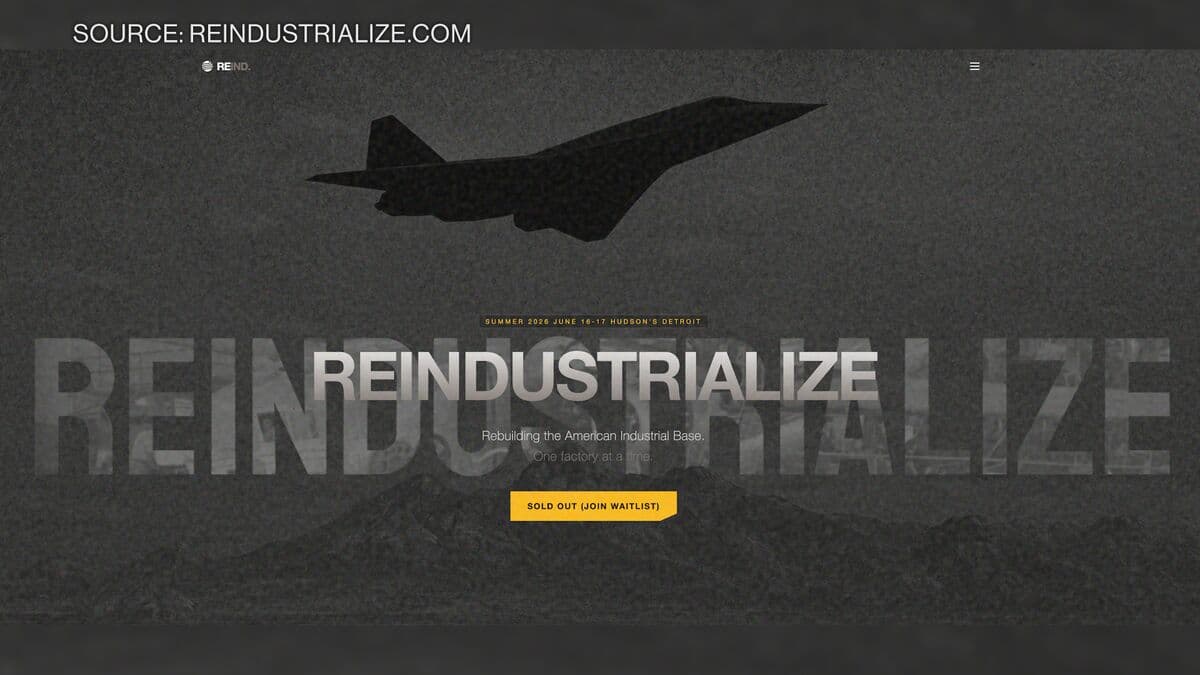
Detroit has long stood as a symbol of American industrial ambition — a city forged in steel, assembly lines, and the relentless drive to make things. So it was no coincidence that the Reindustrialize Summit chose the Motor City as its backdrop. Bringing together industrial leaders, White House officials, and major investors under one roof, the summit delivered a clear and urgent message: manufacturing is no longer just an economic concern — it is a matter of national survival.
The phrase that captured the room — and quickly spread beyond it — was a blunt, energetic declaration: "Build, Baby, Build." Simple as it sounds, those three words carry enormous policy, economic, and geopolitical weight in today's climate. Understanding what was said at this summit, who said it, and why it matters is essential for anyone following the trajectory of American industry, defense strategy, or economic policy.
What Was the Reindustrialize Summit?
The Reindustrialize Summit was a high-profile gathering designed to spotlight the importance of reviving and expanding domestic manufacturing in the United States. Unlike typical trade conferences focused on quarterly earnings or supply chain logistics, this summit operated at a more fundamental level — asking a bigger question: what kind of industrial nation does America want to be in the 21st century?
The attendee list alone signaled the seriousness of the conversation. White House officials brought the weight of federal policy to the table. Industrial leaders from across sectors offered operational perspective on what it actually takes to build things at scale in America today. And major investors — the people who ultimately decide where capital flows — were there to listen, assess, and signal their own intentions.
Axios Defense reporter Colin Demarest, who covered the summit, joined Bloomberg's David Gura and Christina Ruffini on Bloomberg This Weekend to break down the key themes and takeaways. His reporting shed light on both the optimism in the room and the very real challenges that underpin the entire reindustrialization debate.
The National Security Case for Manufacturing
One of the most striking threads running through the Reindustrialize Summit was the explicit connection drawn between manufacturing capacity and national security. This is not a new argument, but it has gained renewed urgency in recent years — and the summit made clear that policymakers are taking it seriously at the highest levels.
The logic is straightforward: a nation that cannot build its own weapons systems, military hardware, semiconductors, and critical infrastructure components is a nation that is strategically vulnerable. The fragility exposed by global supply chain disruptions — from the COVID-19 pandemic to ongoing geopolitical tensions — has made that vulnerability impossible to ignore.
Defense manufacturing, in particular, was a central topic of discussion. The United States has increasingly relied on complex international supply chains for components that feed directly into its military capabilities. Summit participants argued that this dependency represents an unacceptable risk — and that the path forward requires deliberate, sustained investment in domestic production capacity.
'Build, Baby, Build': More Than a Slogan
Slogans at political and policy events often evaporate the moment the microphones go off. But "Build, Baby, Build" appeared to resonate because it crystallized something that many in the room had been feeling for years: that America has spent too long talking about making things and not long enough actually making them.
The phrase carries an implicit critique of regulatory slowness, permitting delays, and the broader bureaucratic friction that can make it extraordinarily difficult to stand up a new factory or expand an existing one in the United States. It also gestures toward an industrial optimism — a belief that the country retains the talent, the capital, and the ingenuity to compete globally if it can get out of its own way.
For investors in the room, the message was also a signal. Government support, favorable policy environments, and a stated national commitment to manufacturing create the kind of long-term visibility that makes large capital commitments easier to justify. When the White House and industrial leaders align on a priority, capital tends to follow.
The Role of Investors in the Manufacturing Revival
The presence of major investors at the Reindustrialize Summit was telling. Private capital has historically been cautious about large-scale domestic manufacturing bets — the time horizons are long, the capital requirements are immense, and the competition from lower-cost international producers is fierce. But the mood in Detroit suggested that calculation may be shifting.
Several factors are driving renewed investor interest in American manufacturing. Federal incentive programs, including provisions from recent landmark legislation around semiconductors, clean energy, and infrastructure, have created new financial incentives for domestic production. At the same time, geopolitical risk premiums on overseas manufacturing have risen sharply, making the math on domestic alternatives look more attractive than it did five years ago.
Detroit as a Symbol and a Statement
Holding the summit in Detroit was itself a deliberate act of symbolism. The city's history — its rise as the manufacturing capital of the world and its painful decades of deindustrialization — serves as both a cautionary tale and a source of inspiration. Detroit has been rebuilding, and summit organizers clearly wanted that resilience to set the tone.
The choice of location also reinforced the summit's core argument: reindustrialization is not an abstract policy goal. It is about real places, real workers, and real communities that were hollowed out when manufacturing left and that stand to benefit most when it returns.
What Comes Next?
The Reindustrialize Summit was a moment of alignment — a rare convergence of government, industry, and capital around a shared vision. But summits produce momentum, not factories. The real test lies in whether the energy generated in Detroit translates into policy action, investment commitments, and tangible construction on the ground.
For those watching closely, the signals are cautiously encouraging. The political will appears to be present. The investor interest is growing. And the national security imperative is not going away. If anything, it is intensifying. "Build, Baby, Build" may have been the rallying cry of a single summit — but it increasingly sounds like the defining industrial challenge of the decade ahead.
- The Reindustrialize Summit brought together White House officials, industrial leaders, and major investors in Detroit.
- The central message linked manufacturing capacity directly to national and military strength.
- Defense manufacturing and supply chain resilience were key topics of discussion.
- The slogan "Build, Baby, Build" captured the summit's pro-industrial optimism and urgency.
- Investor interest in domestic manufacturing is growing, driven by federal incentives and rising geopolitical risk.
- Detroit's symbolic history made it the ideal setting for a conversation about America's industrial future.
As Bloomberg's coverage made clear through Colin Demarest's on-the-ground reporting, the Reindustrialize Summit was more than a policy conference. It was a statement of intent — and a challenge to the entire American industrial ecosystem to rise to meet it.