
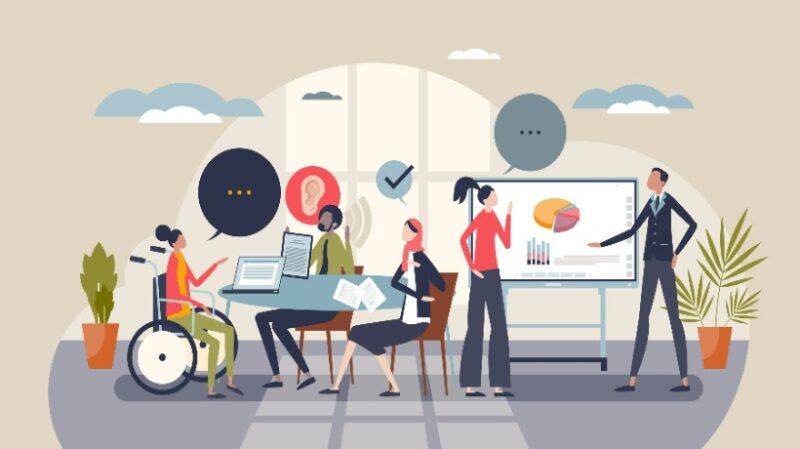
Why Inclusive Workplace Learning Matters More Than Ever
Organizations invest billions of dollars in employee training and development every year, yet many workers still feel left out of the process. Whether it's a training module that assumes a certain cultural background, a learning format that disadvantages employees with disabilities, or a curriculum that reflects the experiences of only one demographic, the gaps in workplace learning equity are real — and costly. When employees don't feel seen or supported in their development, engagement drops, retention suffers, and organizations lose the full benefit of their workforce's potential.
Inclusive workplace learning isn't just a corporate social responsibility checkbox. It is a strategic advantage. Companies that build equitable, adaptive learning environments consistently outperform peers in innovation, employee satisfaction, and long-term productivity. The question isn't whether organizations should prioritize inclusive learning — it's how to do it effectively and sustainably.
Understanding the Barriers to Inclusive Learning
Before organizations can build more inclusive learning programs, they need to honestly assess what's standing in the way. Barriers to inclusive learning often fall into three broad categories: structural, cultural, and technological.
Structural Barriers
Structural barriers include rigid scheduling that doesn't accommodate shift workers, caregivers, or employees across different time zones. When learning opportunities are only available during standard business hours or require in-person attendance, large portions of the workforce are automatically excluded. Similarly, a lack of translated materials or language support can prevent non-native speakers from fully participating in training programs.
Cultural Barriers
Cultural barriers are often subtler but equally damaging. Training content that relies on culturally specific examples, humor, or references can alienate employees from different backgrounds. Assessment methods that favor one learning style — for instance, timed written tests — can disadvantage employees who are highly capable but process information differently. Unconscious bias in who gets nominated for leadership development programs also contributes to systemic inequity within organizational learning frameworks.
Technological Barriers
Not every employee has equal access to high-speed internet, modern devices, or digital literacy skills. As more organizations shift to eLearning platforms and digital-first training, employees in frontline roles, remote areas, or lower-income brackets can find themselves increasingly marginalized. Inclusive learning design must account for varied levels of technical access and proficiency.
Core Principles of Inclusive Workplace Learning Design
Building a truly inclusive learning culture requires more than good intentions — it demands deliberate design principles applied consistently across every stage of the learning development lifecycle.
Universal Design for Learning (UDL)
Universal Design for Learning is a research-backed framework that encourages organizations to provide multiple means of engagement, representation, and expression. In practice, this means offering content in varied formats — video, audio, text, and interactive simulations — so that employees can engage in the way that works best for them. Captions, transcripts, screen-reader compatibility, and adjustable text sizes are not optional add-ons but foundational requirements for accessible learning experiences.
Representation in Content
Inclusive learning content reflects the diversity of the workforce it serves. Case studies, examples, and personas should include a wide range of identities, roles, ages, and backgrounds. When employees see themselves reflected in the training materials they engage with, they are more likely to connect with the content, retain information, and feel valued by their organization. Representation is not tokenism — it is a signal that the organization genuinely respects the full spectrum of its people.
Flexible Learning Pathways
A one-size-fits-all curriculum rarely fits anyone particularly well. Flexible learning pathways allow employees to progress at their own pace, revisit concepts they find challenging, and pursue development tracks aligned with their personal career goals. Microlearning modules, self-paced eLearning courses, and peer learning communities all contribute to an environment where individual differences are accommodated rather than ignored.
The Role of Leadership in Fostering Learning Equity
Inclusive learning doesn't happen in a vacuum. It requires active support and accountability from organizational leadership. When managers and executives model a growth mindset — openly acknowledging their own learning journeys, participating in development programs, and advocating for equitable access to training resources — they set a powerful cultural tone that cascades throughout the organization.
Leaders also play a critical role in ensuring that access to high-impact learning opportunities is distributed fairly. Too often, stretch assignments, mentorship programs, and leadership academies are informally allocated in ways that reflect existing power structures rather than genuine potential. Formalizing nomination and selection processes with clear, bias-aware criteria helps dismantle these patterns over time.
Using Data to Drive Inclusive Learning Improvements
Organizations serious about learning equity need to measure it. Learning management systems and people analytics tools can surface important patterns — for example, which employee segments complete training at lower rates, which formats generate the most engagement across different demographics, or where drop-off points occur in specific courses. This data should be reviewed regularly and used to inform iterative improvements to learning programs.
It's equally important to collect qualitative feedback. Pulse surveys, focus groups, and employee listening sessions can reveal the human dimensions of learning experience that numbers alone can't capture. When employees feel that their feedback genuinely shapes how training is developed and delivered, their trust in the organization's commitment to inclusion deepens.
Building an Adaptive Learning Culture for the Long Term
Ultimately, inclusive workplace learning is not a project with a defined end date — it is an ongoing organizational commitment. Building an adaptive learning culture means continuously revisiting assumptions, updating content to reflect evolving workforce needs, and investing in the skills of learning and development professionals to design with equity at the center.
- Audit existing training materials regularly for bias, accessibility gaps, and representational shortcomings.
- Involve diverse employee voices in the design and review of new learning programs from the outset.
- Set measurable inclusion goals for learning participation rates and track progress transparently.
- Provide learning and development teams with training on inclusive design principles and unconscious bias.
- Celebrate and recognize learning achievements equitably across all levels and functions of the organization.
When every employee has genuine access to meaningful learning opportunities, organizations don't just fulfill a moral obligation — they unlock the full creative and professional potential of their entire workforce. Inclusive workplace learning is, quite simply, better learning for everyone.